How Local Businesses Can Improve Their AI Search Visibility
A practical guide for agencies, contractors, healthcare providers, and other local service businesses on what actually affects AI search visibility.
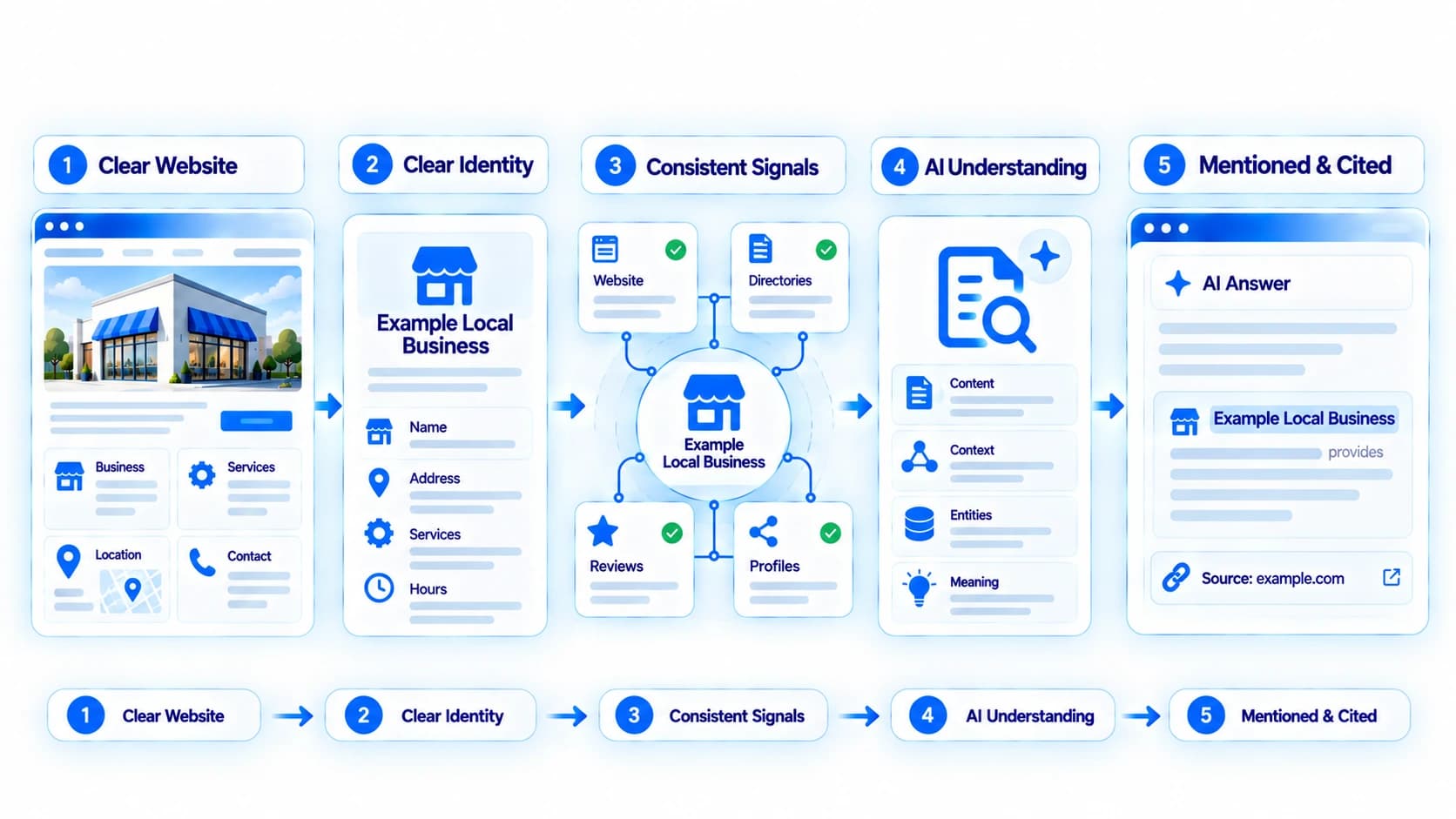
Local businesses face a specific version of the AI visibility problem: an automated system doesn't just need to understand what you do, it needs to resolve exactly where you operate and confirm that consistently across multiple sources. A plumber in Austin and a plumber in Denver can have nearly identical websites in every way except this, and that difference can affect whether either one gets surfaced for a location-specific question.
This guide covers what actually affects AI search visibility for local businesses specifically, whether you're an agency, a contractor, a law firm, a clinic, or any other business that serves a defined geographic area.
Why Location Consistency Matters More for Local Businesses
When someone asks an AI assistant for a recommendation "near me" or in a named city, the system has to resolve two things at once: what you do, and whether you actually serve that location. If your business name, address, and service area aren't stated identically across your website, your structured data, and your external profiles, you've introduced exactly the kind of ambiguity that makes an automated system less confident recommending you for a location-specific query.
The Core Signals to Get Right
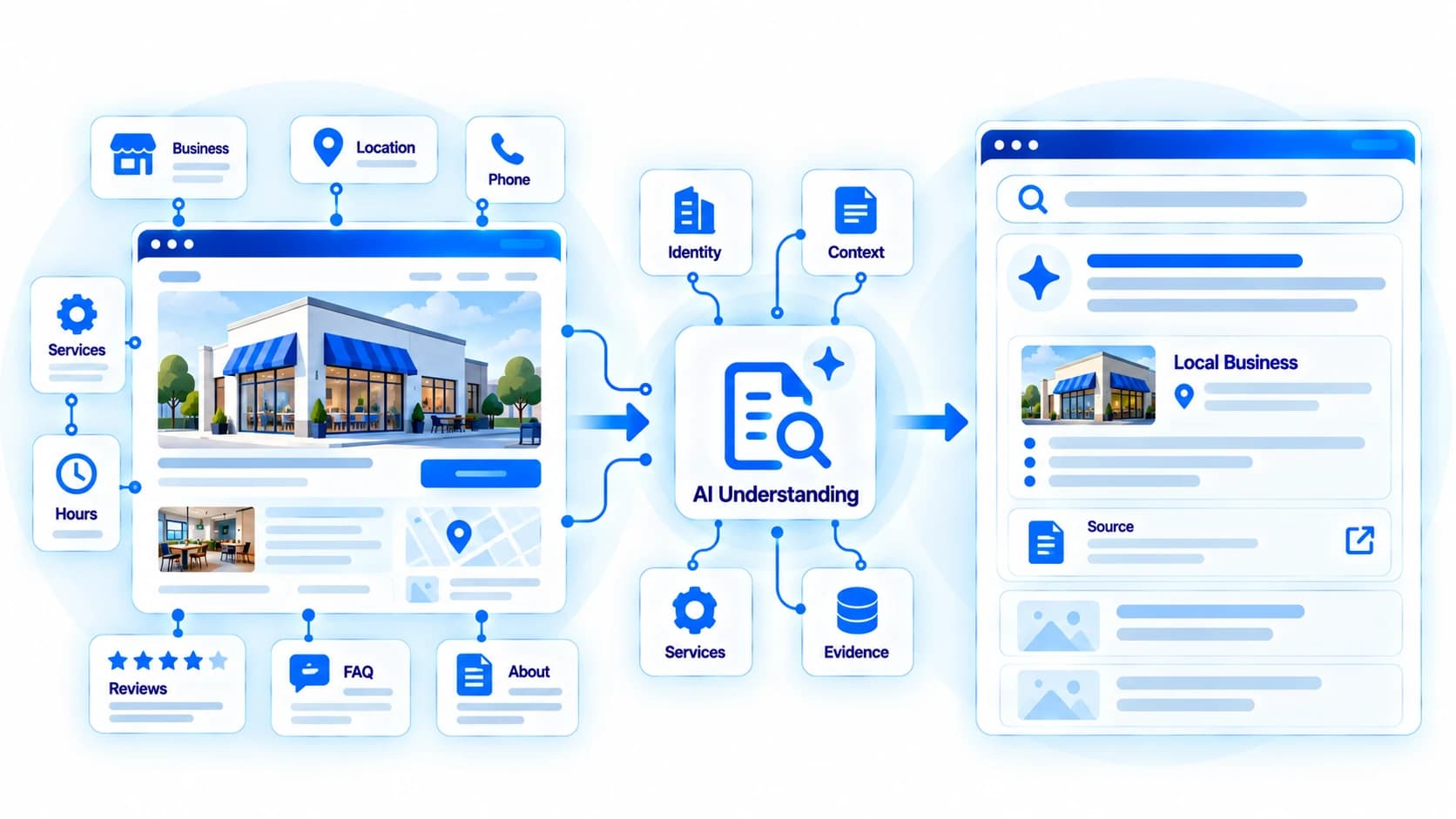
Business name: your exact, official operating name, stated the same way everywhere. Service area: explicit, not implied. List the specific cities, counties, or regions you actually serve, rather than assuming your address alone communicates it. Contact details: a working phone number and email in visible, clickable text. Hours, where relevant: stated in plain text, not only inside a widget that requires JavaScript to render.
If you genuinely serve several distinct areas with real local specifics (a different service radius, local regulations, or a local team), a dedicated page per area can state those specifics explicitly. A single page listing every area is enough when the specifics don't actually differ by location; a dedicated page for each one only adds value when there's something distinct to say. Swapping only the city name across otherwise identical pages doesn't create that distinction, and reads as exactly the kind of thin, duplicate content search engines and automated readers are built to discount.
Beyond the basics, local structured data (LocalBusiness Schema.org markup) reinforces these facts in a machine-readable format, and a genuine FAQ section addressing common local questions (service area boundaries, response times, licensing) gives an automated reader direct, extractable answers instead of forcing it to infer them.
Practical Copywriting Comparisons:
"We proudly serve the greater metro area."
Doesn't name a single specific place. A system can't confirm you serve any particular city from this alone.
"We provide general and cosmetic dentistry for patients in Evanston, Skokie, and Wilmette, Illinois."
Names the specific service and three specific service areas, checkable facts a system can match to a location-specific question.
Business Entity Consistency Across the Web
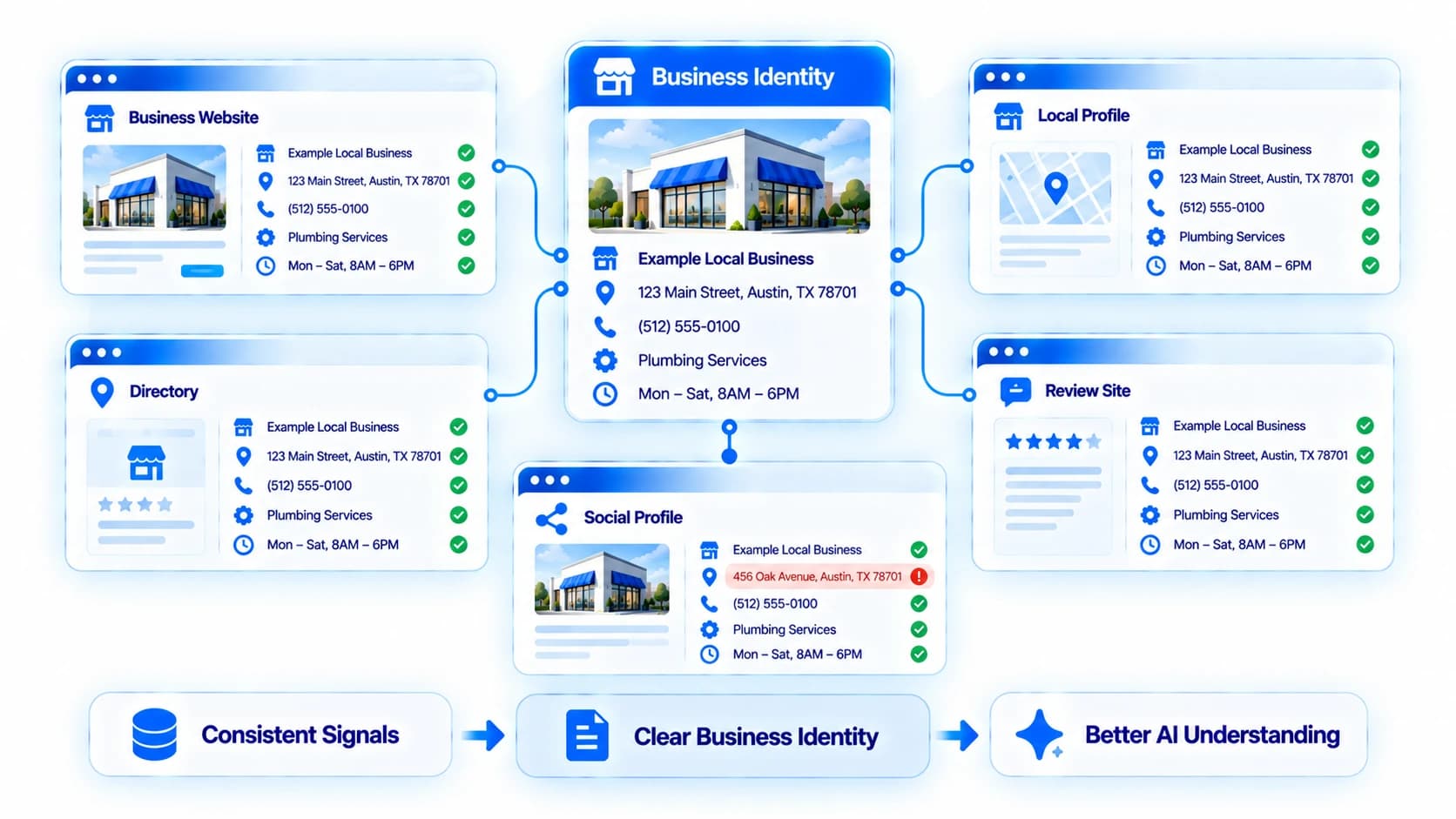
AI systems don't rely solely on your own website. Google has specifically named Google Business Profile as one of the ways local business information becomes visible in its own AI-powered search features, so it's worth treating as more than just one corroboration source among several: keep your business name, address, phone number, hours, and category current there specifically, not only on your own site.
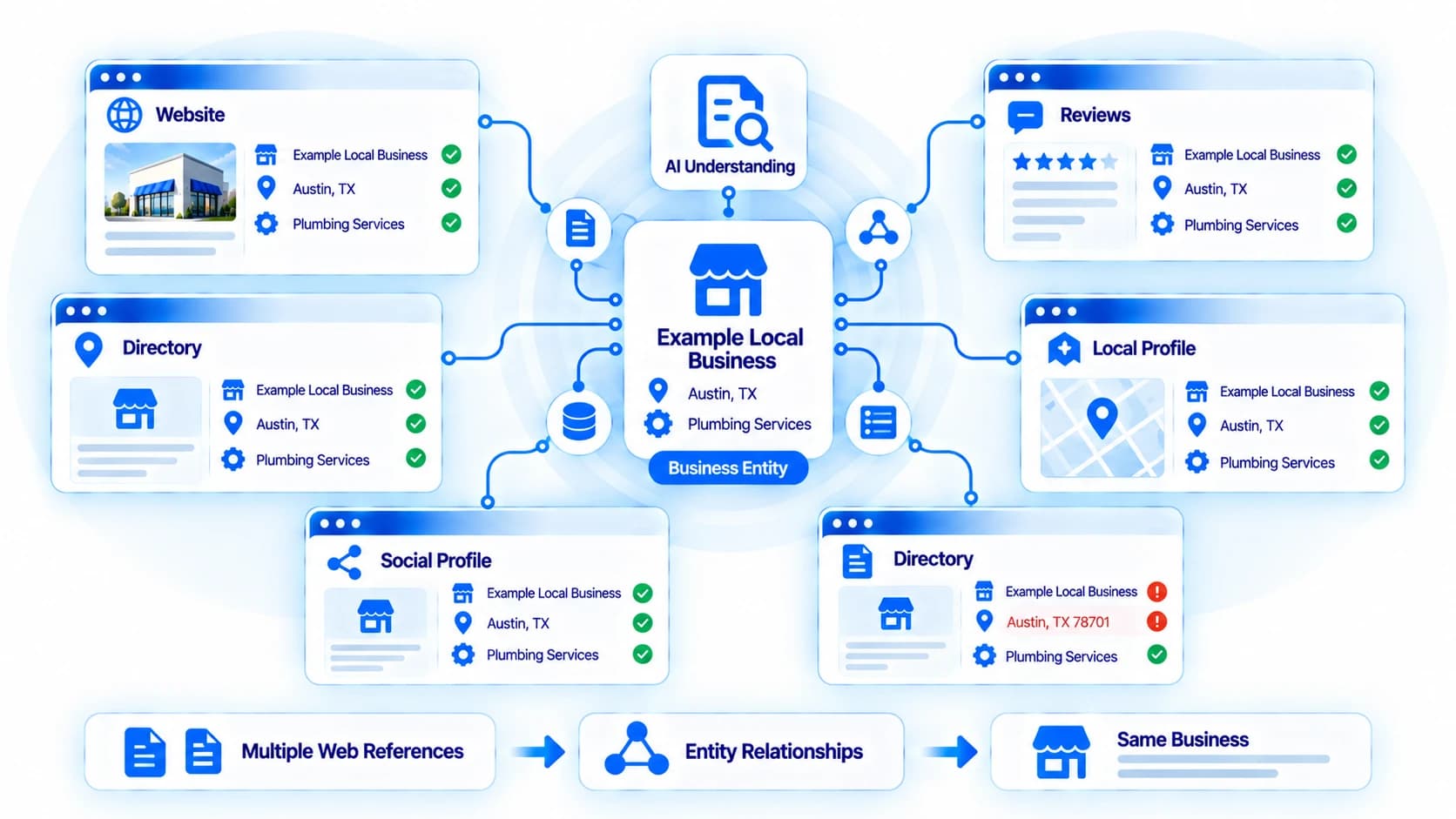
Beyond that, independent directories, review platforms, and local publications can plausibly provide corroboration, though how much any specific system weighs them isn't documented. If your business name, address, or phone number differs even slightly across these (for example, split between an old address and a new one), it creates the same kind of ambiguity as inconsistency on your own site, just harder for you to notice and fix.
Periodically searching your own business name is a simple, effective way to catch these inconsistencies before they compound.
Practical Notes by Business Type
Agencies and consultancies often serve a broader, less geographically bound audience; the same clarity principles apply, but service area may be described in terms of industries or company sizes served rather than a strict radius. Contractors and home service businesses benefit heavily from explicit service-area lists and licensing details, since these are exactly the facts a local query is trying to confirm. Healthcare and legal businesses carry an added expectation of credential clarity (licenses, certifications, and areas of practice stated explicitly), since trust signals matter more when the stakes of a wrong recommendation are higher.
How AI Citation Analysis Can Help
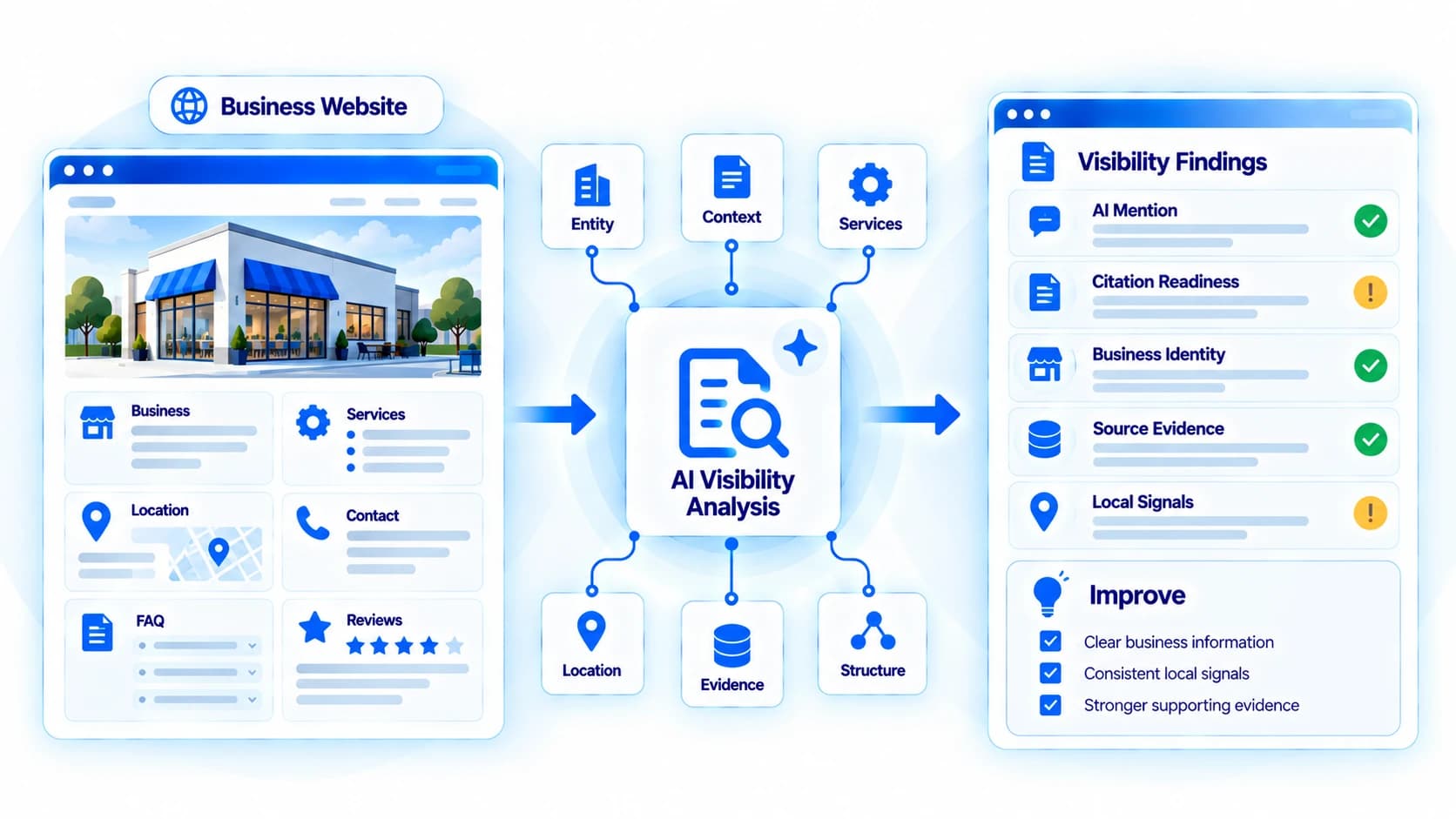
Everything above is something you can check yourself, by comparing your own site against your Google Business Profile and other external listings. AI Citation Analysis runs a free scan that checks the same underlying signals (entity consistency, content specificity, trust indicators, and crawl access), so you can see where your own site is unclear or inconsistent. Comparing it against your Google Business Profile and other listings is still a manual step.
It's a readiness check, not a citation guarantee. Because it doesn't query ChatGPT, Claude, Perplexity, or any other assistant, it can't tell you whether one has actually recommended you for a specific local query.
Frequently Asked Questions
Does Google Business Profile affect AI search visibility?
Yes. Google has said Google Business Profile is one of the ways local business information becomes visible in its own AI-powered search features. Keeping it current, including your business name, address, phone number, hours, and category, is one of the more concrete, checkable things a local business can do.
Do I need a separate page for each city or area I serve?
Only if the specifics genuinely differ by location (a different service radius, local regulations, or a local team). If your offering is identical everywhere you operate, a single page that explicitly lists every area you serve is enough; a dedicated page per city adds value when there's actually something distinct to say about each one.
Does having a consistent name, address, and phone number guarantee I'll be recommended for local AI search queries?
No. Consistency removes a common source of ambiguity; it doesn't guarantee a specific assistant will recommend you for a specific query. Whether that happens depends on the system, the question, and factors outside any business's direct control.
How is this different from local SEO?
The underlying facts (name, address, service area, and hours) overlap heavily with local SEO. The difference is in the destination: local SEO aims to rank in a list of map results and links, while this is about making the same facts clear enough for an AI system to correctly resolve your business and use them in a generated answer.
Do agencies or consultancies need to worry about local AI visibility?
Less than a business tied to a physical location, but the same clarity principle applies. If you serve a defined geographic market, industry, or company size, stating that explicitly still helps an automated system understand who you actually serve.
Final Takeaway
For local businesses, AI search visibility comes down to a specific kind of clarity: an unambiguous name, an explicit service area, working contact details, and consistency across every source an automated system might cross-reference.
None of it is exotic. Most of it is a matter of checking your own site and your external profiles side by side, and fixing whatever doesn't match.
Sources
- Google's guide to generative AI features in Search · Google Search Central