Why Your Website May Not Be Showing Up in AI Answers
A practical look at why strong Google rankings and good design don't guarantee a mention in ChatGPT, Perplexity, or Google's AI Overviews, and a checkable way to find where your own website's evidence is thin.
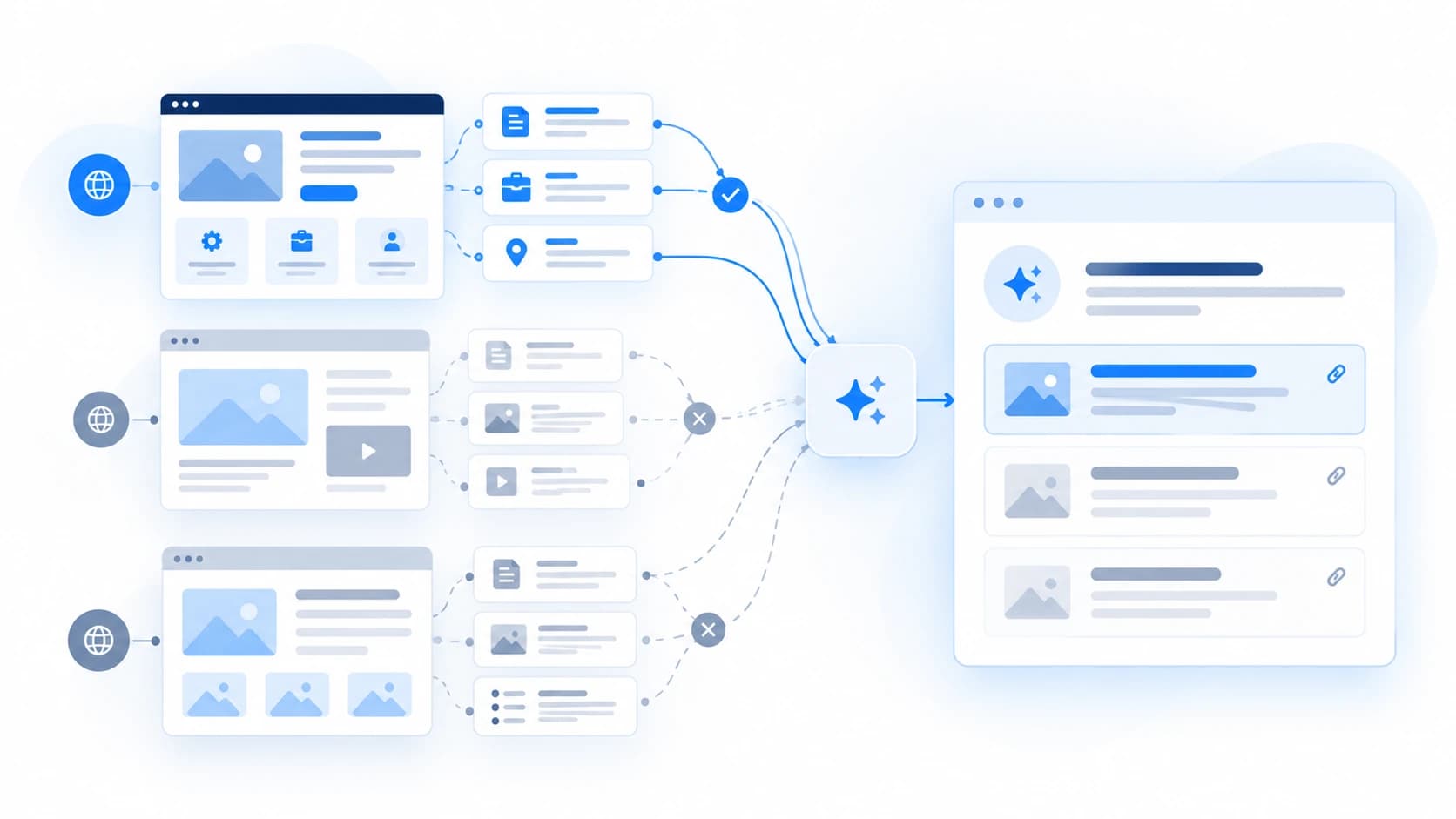
An AI visibility gap is the space between how a website performs in traditional search and whether AI assistants such as ChatGPT, Claude, Gemini, or Perplexity can find, understand, and use it as a source. AI Citation Analysis can check whether a site contains the clear, verifiable information these systems need to retrieve it; it cannot see inside any assistant or confirm that a specific answer will name or link to a given business.
That gap is easy to observe and hard to diagnose from the outside. A business can rank first on Google and still watch an AI assistant recommend a competitor by name when asked the exact question a prospective customer would type.
This article covers a small set of website-level factors that plausibly affect whether an AI system can use a site as a source, and a practical process for checking them yourself. Neither this article nor the scan behind it can tell you why a specific AI system did or did not cite a specific website on a specific day; no outside party can, because the providers don't publish that mechanism. What both can do is show you where your own site's evidence is thin.
Retrieval vs. Synthesis: Why This Is a Different Problem Than SEO
For most of the web's history, search worked as a retrieval problem. A search engine indexed pages, matched a query against them, ranked the results by signals like backlinks and on-page content, and handed a list of links to a person, who did the reading, comparing, and deciding.
AI-powered answer engines add a second step: synthesis. When someone asks an AI assistant a question, the system has to retrieve relevant material, decide which of it is reliable enough to build an answer from, write that answer, and choose which specific source, if any, to cite alongside a given claim.
That extra step is why a site can win keyword competitions and still be a poor source to cite. Ranking well answers 'which pages are relevant to this query.' Being cited answers a harder question: 'which source states this fact clearly enough to quote?'
Traditional search asks which pages are most relevant to a set of keywords. An AI assistant asks which source states a specific fact clearly and verifiably enough to quote.
A Practical Way to Think About the Problem
AI providers do not publicly document the full process they use to select or rank sources: OpenAI, Anthropic, Google, and Perplexity each run their own retrieval systems and none publish the internal steps. What follows is a practical, five-stage diagnostic framework built by AI Citation Analysis to make the problem checkable, not a prediction of any model's internal decision or a documented specification from any provider.
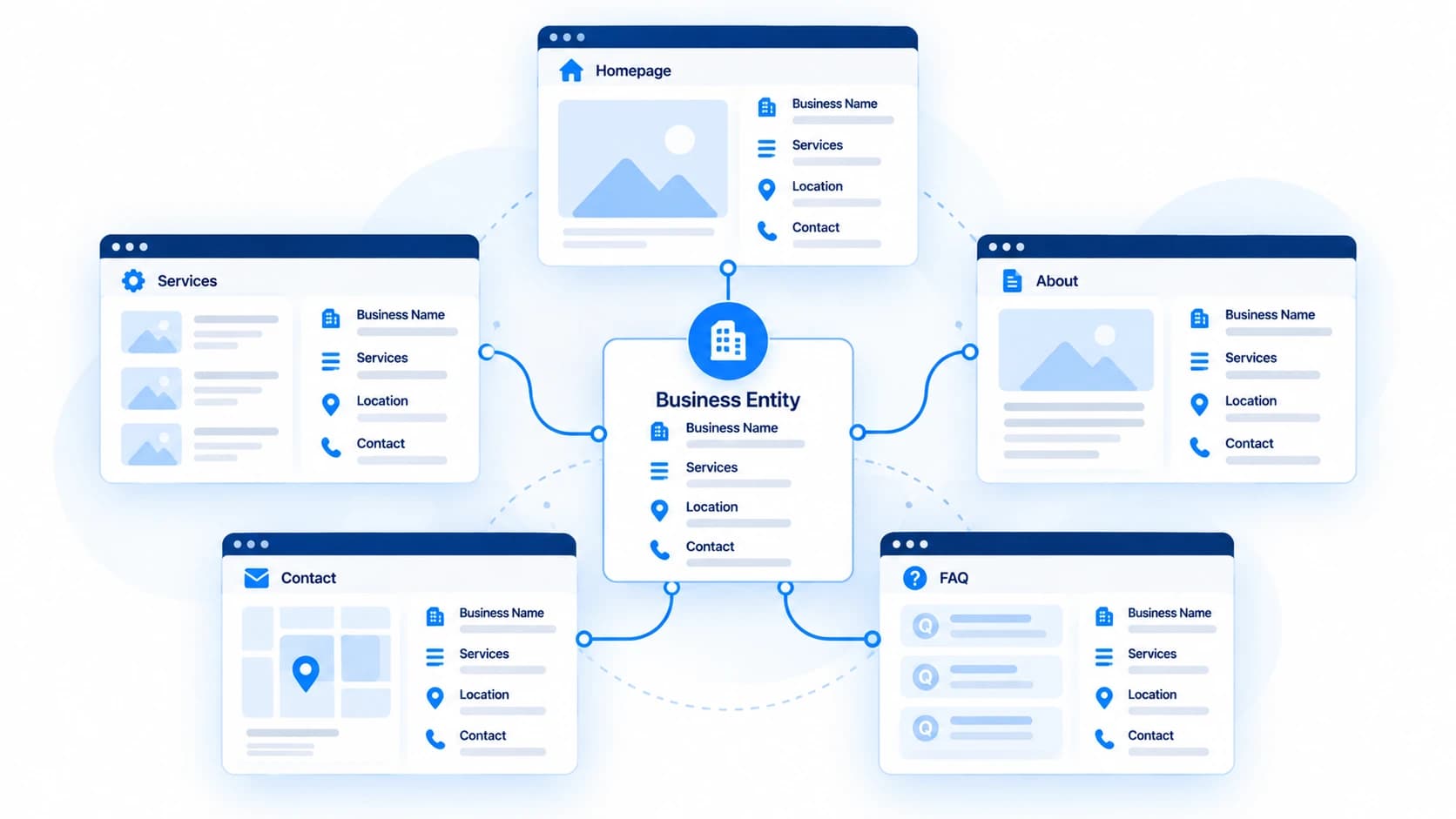
Stripped down to what's actually checkable from outside a model, the problem breaks into five stages. Discovery: can the system find your site at all, is it reachable, indexed, and not blocked? Entity match: can it identify your business clearly, one consistent name, location, and set of contact details, not conflicting versions across pages? Evidence density: does your text state facts explicitly, or only imply them? Corroboration: does anything outside your own site confirm what you claim? And citation: having gathered all of that, which specific source does the system actually name or link to?
The first four stages are things you can check directly on your own site, and the practical process later in this article walks through exactly how. The fifth, citation, isn't something you control directly: it's the AI's own downstream choice among sources that already passed the first four, and the next section looks at it more closely. A site that fails discovery is invisible regardless of how good the rest of it is; a site that passes discovery, entity match, and corroboration but writes only in vague marketing language still gives a system little to quote.
Discovery
The system retrieves a pool of candidate pages
Entity Match
It tries to resolve who you are, unambiguously
Evidence Density
It looks for explicit, extractable facts
Corroboration
It checks whether other sources agree
Citation
It picks which source to name or link
A synthesized practitioner model for reasoning about the pipeline, not a documented spec from any single AI provider.
Four Things People Get Wrong About AI Visibility
AI search is new enough that a lot of confident, oversimplified advice is already circulating. A few of the most common claims don't hold up against what providers themselves document.
| Common Claim | Closer to What's Documented | What to Do Instead |
|---|---|---|
| Ranking #1 on Google guarantees you'll show up in AI answers. | Google has said its AI-powered search features are rooted in the same core Search ranking and quality systems, not a separate algorithm, but that's Google specifically. OpenAI, Anthropic, and Perplexity run entirely separate retrieval processes that don't reference Google's rankings. | Treat a strong Google ranking as helpful, not sufficient. Check what a specific page actually states, not just where it ranks. |
| Repeating keywords or adding more FAQ blocks will fix it. | Systems built to answer natural-language questions generally work from meaning rather than keyword frequency. Repetitive padding is a low-quality signal, not a clarity signal. | Write plain, specific answers to the real questions your buyers ask, once, clearly. |
| Adding Schema.org markup guarantees AI inclusion. | Schema can help a system disambiguate an entity, but Google has stated structured data isn't required for its generative AI features, and no major provider documents markup as a citation requirement. Markup that contradicts your visible page text is a bigger risk than having none. | Keep any markup you do add accurate and consistent with what's actually on the page. |
| My brand is already known from AI training data, so this doesn't matter. | Training data is a static snapshot from a past cutoff date. An assistant capable of searching the live web relies on what it can retrieve right now for a current question, not on what a model happened to learn previously; an assistant without that capability may still answer from training data alone, and that varies by product and configuration. | Keep the information a search-capable assistant would retrieve today accurate and current. |
Mentioned by Name but Not Cited: Why That Happens
This is the citation stage from the framework above, and it's worth a closer look: one of the more useful distinctions in this space is between a brand mention and a website citation.
An assistant might mention your company by name, for example listing 'Acme Logistics, NorthWay Transport, and Vertex Shipping' as options, while the clickable citation attached to that sentence points not to AcmeLogistics.com but to a directory listing or a trade publication instead.
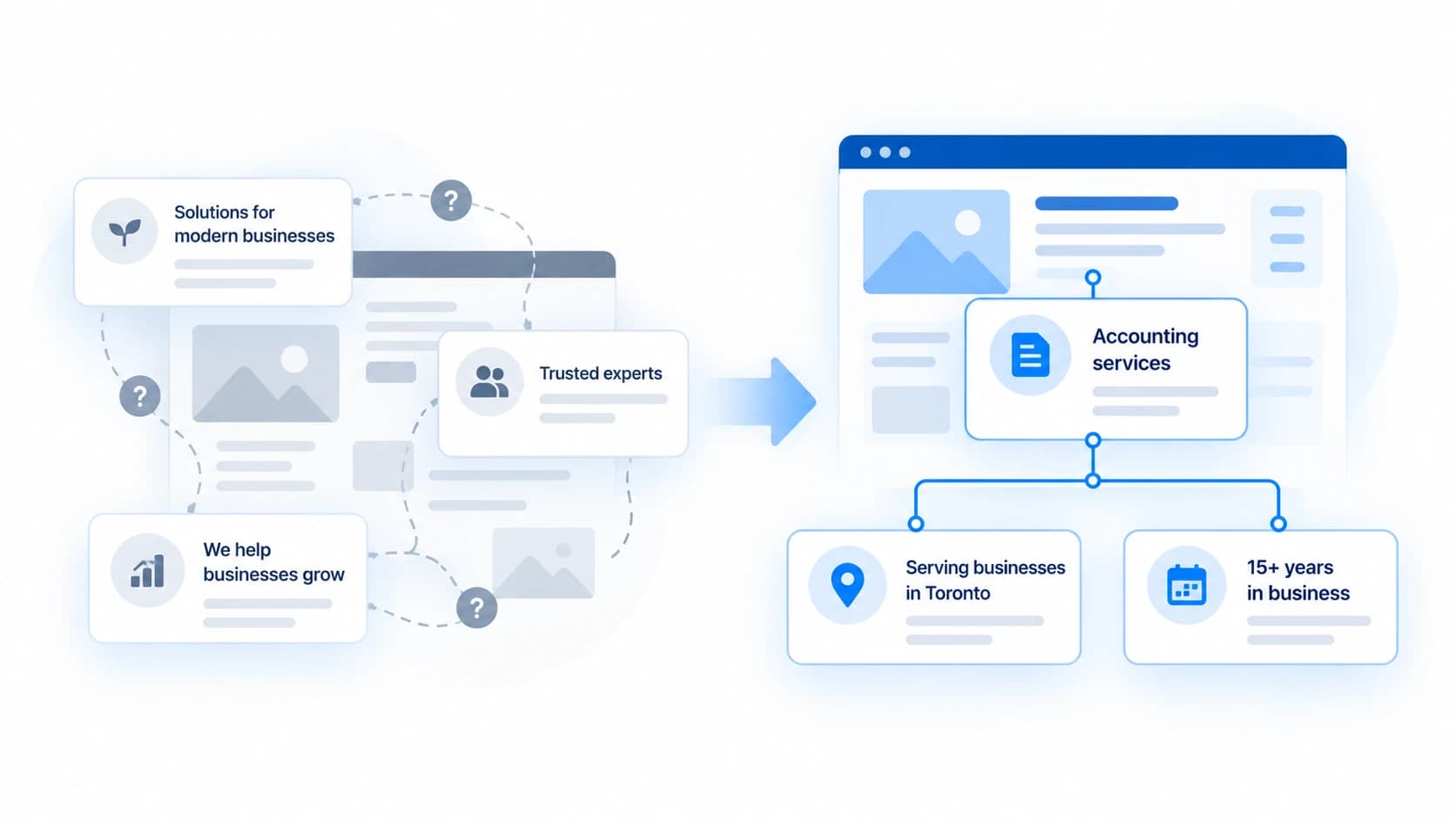
Hypothetical example: imagine Acme Logistics has one vague landing page with no specifics on fleet size, service area, or pricing. An assistant may still recognize the name as belonging to a company in that category, but when it looks for a page to cite for a specific claim, Acme's own site doesn't state that claim clearly enough, so a third-party page that does gets the citation instead.
That's a plausible explanation, not a documented rule; no provider publishes exactly why one source is chosen over another. What's checkable is whether your own site currently states the specific facts a system would need to quote.
A mention shows an assistant knows your business exists. A citation shows a specific page gave it something concrete enough to point to.
Mentioned
Named, not linked
Cited
Named as the source
The gap this article explains, and why it happens.
Why Independent Corroboration Matters
This is the corroboration stage from the framework above. Systems built to retrieve and cross-check web sources are generally designed to weigh multiple sources rather than take a single page at face value, though how much weight any specific provider gives to independent confirmation isn't publicly documented and likely varies. That's part of why third-party confirmation (reviews, directories, trade press) plausibly matters: if several independent sources agree that a firm specializes in a particular service in a particular area, a system has more to work with than if the claim only appears on the business's own homepage.
This doesn't mean chasing mentions for their own sake. A handful of accurate, independent confirmations of the facts that matter most tends to do more than a large volume of generic ones.
Why the Same Question Gets a Different Answer on a Different Day
It's common to see an AI assistant name a business on one day and a competitor on the next, for what looks like the identical question. Unlike a traditional search index, which stays relatively stable between updates, generative answer engines have several built-in sources of variability.
Retrieval variation. Real-time search calls can return a somewhat different set of top results depending on server response times, geographic routing, and how recently the underlying index updated.
Sampling variation. Many deployed models draw on some degree of randomness (often described as temperature) when drafting a response; the exact configuration is provider- and product-specific and isn't publicly documented. Where that's the case, sentence construction and which source gets referenced can shift between runs, even for an identical prompt.
Phrasing sensitivity. 'Best commercial lawyers for startups' and 'recommended startup attorneys with flat-fee pricing' are different queries to a retrieval system, even though a person would read them as the same request.
The practical takeaway is that one result tells you very little. A pattern across several differently phrased questions, asked more than once, tells you a lot more, and that's the basis for the process below.
Search Crawlers vs. Training Crawlers: A Distinction Worth Getting Right
A common, avoidable way to lose AI visibility is blocking the wrong crawler. Several providers run separate crawlers for search and for model training, controlled independently in robots.txt, and blocking the training crawler is not documented by any of them as removing a site from that provider's search results.
None of this guarantees a citation either; allowing a crawler makes a site eligible to be retrieved, not what an assistant does with what it finds. The table below covers only what's actually documented: several assistants, including the retrieval process behind xAI's Grok, don't publish which crawler feeds their live answers, so there's no row for them here.
| Provider | What's Documented | What Blocking the Training Crawler Does Not Do |
|---|---|---|
| OpenAI (ChatGPT) | OAI-SearchBot is documented as the crawler behind ChatGPT's search results, and OpenAI states sites opted out of it aren't shown there. GPTBot is documented separately, for training. | Blocking GPTBot isn't documented as affecting OAI-SearchBot or ChatGPT search visibility; the two are separate rules. |
| Anthropic (Claude) | Claude-SearchBot is documented for search quality; Anthropic says blocking it specifically may reduce visibility in Claude's results. ClaudeBot is documented separately, for training. | Blocking ClaudeBot is a separate control from Claude-SearchBot in Anthropic's own documentation. |
| Perplexity | PerplexityBot is documented as respecting robots.txt for surfacing and linking sites, and as not used to train Perplexity's models. | There's no separate training crawler to confuse it with; Perplexity-User, a different user-triggered crawler, is documented as generally not following robots.txt the same way. |
| Google (Search and AI Overviews) | Googlebot is Search's crawler, including for AI Overviews and AI Mode eligibility. Google-Extended is a separate, documented control for using content to train Gemini and other Google AI models. | Google states directly that Google-Extended does not affect a site's inclusion or ranking in Search. |
What You Can Actually Measure
It helps to be precise about what's actually observable here, since conflating these leads to false confidence in either direction. None of the rows below, alone or together, can explain why a specific assistant did or didn't cite a specific page on a specific day (providers don't publish that mechanism), but they can tell you, honestly, what's currently observable.
| Measurement | What It Tells You | What It Doesn't Tell You |
|---|---|---|
| A website readiness scan, like this product's | Whether your public pages contain the kind of clear, verifiable, accessible information these systems are documented to need, scored against a fixed set of checks. | Whether any AI assistant has ever mentioned or cited your business, or will in the future. |
| Google Search Console's generative AI performance report | Impression counts for your pages inside Google's AI Overviews and AI Mode, reported directly by Google. | Data from other providers, and, as of this writing, click data for these surfaces the way traditional Search reports provide it. |
| Bing Webmaster Tools' AI Performance report | Citation and grounding-query data for how Copilot and related Bing AI surfaces use your pages, reported by Microsoft. Entered public preview in February 2026. | Data from providers other than Microsoft. |
| Manually asking assistants your own buyer questions | A real, current snapshot of what a specific assistant says on a specific day, for the exact phrasing you used. | A stable or complete picture: the same question can return a different answer tomorrow, and most assistants don't offer a documented way to query this at scale. |
A Practical Process for Checking Your Own Site
You can check most of this yourself: the discovery, entity match, evidence density, and corroboration stages from the framework above are all things a website owner can inspect directly. None of it requires special tools, and none of it guarantees what a specific assistant will say next time. What it does is show you where your own evidence is currently thin.
Start with a manual spot-check. Ask three or four AI assistants a real buyer question in your category and location, the way an actual prospective customer would phrase it, and record what happens: is your business named, linked, or is a competitor cited instead? Repeat the question a few different ways; a single result tells you little, a pattern across several tells you more.
Then confirm your site is actually reachable, the discovery stage. Check that your key pages return real content without requiring JavaScript to render, aren't blocked by robots.txt for the crawlers that matter, and don't return errors. A page that's fully accurate but inaccessible to a crawler is invisible before any of the following even applies.
Next, check entity match. Search your own business name. Is your official name, address, and phone number stated identically everywhere it appears: on your site, in your structured data, and across the directories and profiles you control? Inconsistency here is a common, checkable reason a system hesitates to name a business confidently.
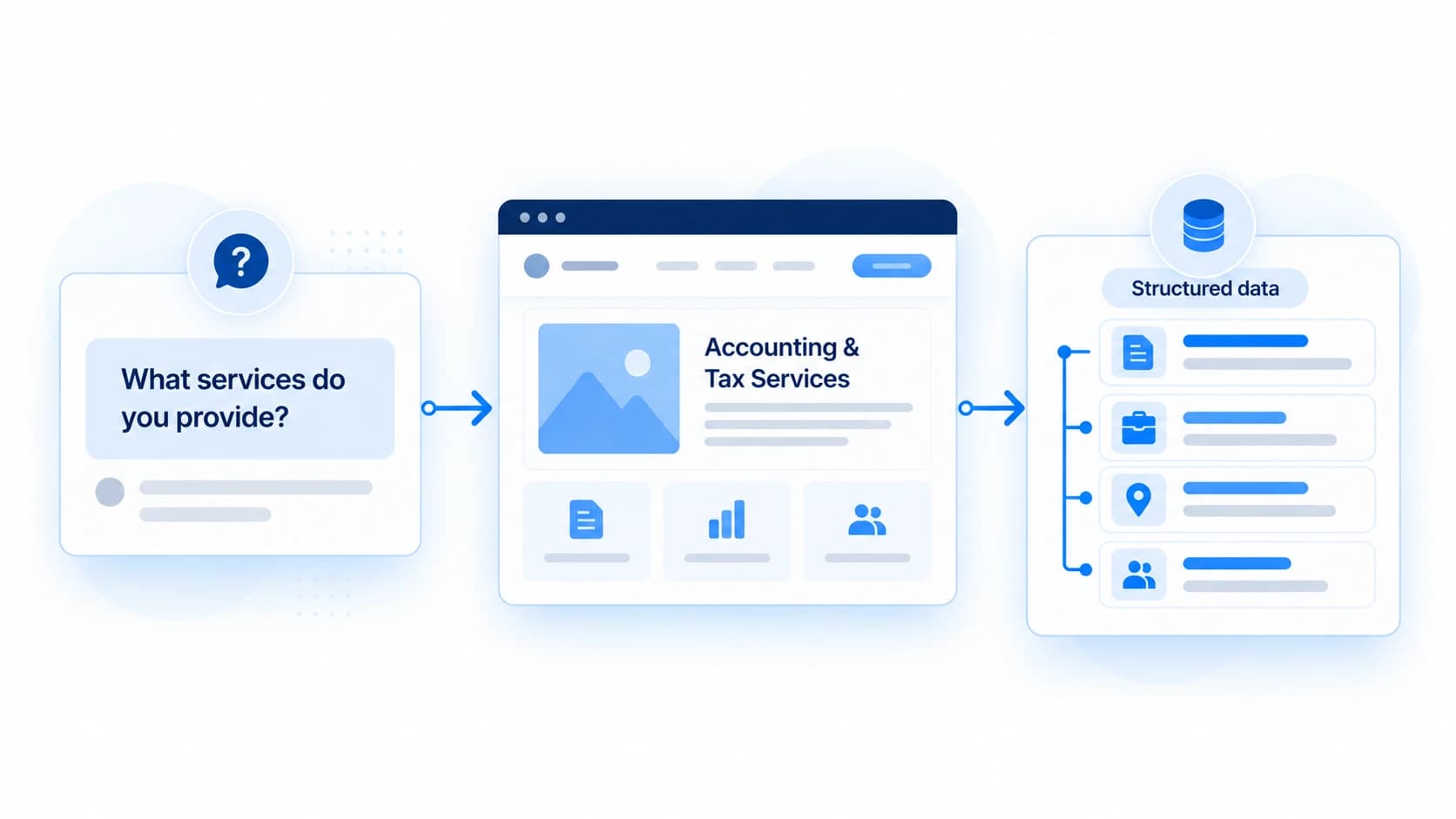
Then check evidence density on your three or four most important pages. Pick a core service page and read it the way a stranger would: can you find the specific facts (service area, pricing, credentials) stated directly in the text, or only implied by a photo or a slogan? Content a person has to search for or infer is generally the same content an automated reader has no reliable way to extract either.
Finally, look for independent corroboration: do review platforms, directories, and trade associations confirm the same facts your site states? A business whose only claims exist on its own homepage is harder for a system to verify.
Implementation Checklist for Web Teams
Key action items to work through before assuming automated systems can find what they need:
Manual Spot-Check
- Asked 3-4 AI assistants a real buyer question in your category and location.
- Recorded whether your business was named, linked, or absent for each.
- Repeated the question with 2-3 different phrasings to check for a pattern.
Clarity
- Core service or product pages state specific facts in text, not only in images, PDFs, or slogans.
- Your service area, pricing model, and credentials are stated directly in the text, not just implied by an image or a slogan.
Identity
- Business name, address, and phone number match exactly across your site, your structured data, and the external profiles you control.
- No conflicting brand-name variations appear across different pages.
Trust
- Independent sources (reviews, directories, trade associations, press) confirm the same facts your site states.
- Key claims aren't found only on your own homepage.
Expertise
- Pages show specific, demonstrated knowledge (named team members, case studies, documented experience), not only general claims.
- Content goes beyond generic marketing language into substantive, checkable detail.
Discoverability
- Key pages return real text content without requiring JavaScript to render.
- robots.txt doesn't block the pages you want AI systems, including named search crawlers, to read.
How This Maps to AI Citation Analysis's C-I-T-E-D Framework
The checks above map onto this product's own five-part scoring framework, C-I-T-E-D: Clarity, Identity, Trust, Expertise, and Discoverability. Entity match is largely an Identity question. Evidence density is largely a Clarity question (can AI clearly understand what you offer). Corroboration is a Trust question (is your evidence findable, not just claimed). Discovery is a Discoverability question (can a system retrieve and access the information at all). Expertise, demonstrated depth like named team members and documented experience, matters too, but it's less one specific gap and more a general strength worth building over time.
How AI Citation Analysis Can Help
The manual spot-check above (asking AI assistants directly) is something only you can do. AI Citation Analysis doesn't query ChatGPT, Claude, Perplexity, or any other assistant, and can't tell you what one currently says about your business. What it can do is help with the four checkable stages from the framework above: it scans your public pages and checks entity match, evidence density, on-site trust signals (such as reviews, credentials, and policies it can find on your pages), and discovery (crawl access, including whether robots.txt allows named crawlers such as Googlebot, OAI-SearchBot, and Applebot), organized and scored so you can see where to start.
It's a readiness check, not a citation guarantee. A high score means your own website is no longer the likely bottleneck; it doesn't promise that a specific assistant will mention or cite you on any given query.
Frequently Asked Questions
Why does ChatGPT mention my competitor by name but not my business?
AI providers don't publish exactly why one page is cited over another. What this product is built to check is whether a page states the relevant facts explicitly and specifically rather than only implying them. If a competitor's page does that more clearly than yours, that's a common, checkable reason, not the only possible one.
Does ranking #1 on Google guarantee my business shows up in AI answers?
No. Google says its AI-powered search features draw on the same core ranking and quality systems as regular Search, not a separate algorithm, but a top ranking still doesn't guarantee an AI Overview, an AI Mode answer, or a citation from a different provider such as ChatGPT or Perplexity, each runs its own retrieval process.
Can blocking GPTBot remove my website from ChatGPT search results?
Not by itself, per OpenAI's published crawler documentation. OpenAI documents GPTBot as its training crawler and OAI-SearchBot as the separate crawler behind ChatGPT's search results. A site that blocks GPTBot but still allows OAI-SearchBot remains eligible to appear there.
How can I see whether Bing or Copilot is citing my website?
Bing Webmaster Tools has an AI Performance report, in public preview since February 2026, showing Microsoft's own citation and grounding-query data for how Copilot and related Bing AI surfaces use a site's pages, the most direct officially reported view for that ecosystem.
Does Google provide any AI visibility report of its own?
Yes. Search Console's generative AI performance report shows how a site's pages appear in Google's AI Overviews and AI Mode, reported as impressions. It doesn't cover other providers, and it doesn't include click data for those specific surfaces the way Google's traditional Search performance report does.
Final Takeaway
The shift toward AI-assisted search doesn't make web fundamentals obsolete, but it does raise the bar for how explicitly a website has to state what's already true: who you are, what you do, where you do it, and why someone should believe you.
None of that guarantees a citation from any specific assistant on any specific day; no one outside these companies can promise that. What it does is remove your own website as a likely reason you're missing from an answer, so if you're still absent after checking the factors above, the cause is probably elsewhere: a fast-moving prompt, a competitor with a small edge, or an assistant that doesn't search the live web at all. Either way, you'll know where to look next.
Sources
- AI features and your website · Google Search Central
- Google's guide to generative AI features in Search · Google Search Central
- About the generative AI performance report · Google Search Console Help
- Overview of OpenAI's crawlers · OpenAI
- Does Anthropic crawl data from the web, and how can site owners block the crawler? · Anthropic
- Perplexity crawlers · Perplexity
- Introducing AI Performance in Bing Webmaster Tools (Public Preview) · Microsoft Bing Webmaster Blog