The AI Visibility Audit Checklist: What to Check on Your Website
A practical, self-guided audit covering what actually affects a website's AI visibility, organized by category so you know exactly where to start.
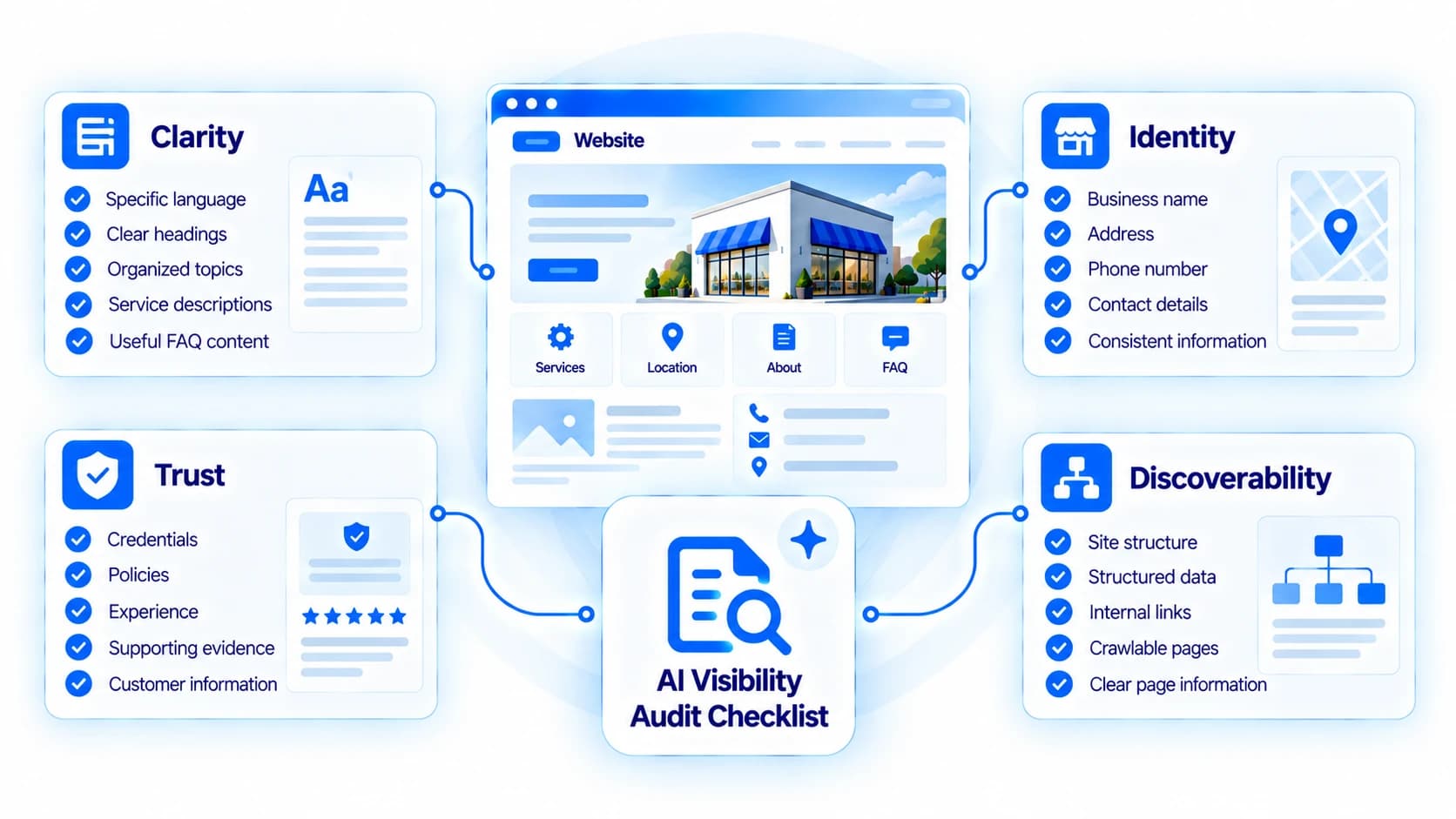
An AI visibility audit is a systematic check of the specific, verifiable signals that affect how clearly an automated system can find, understand, and trust a website, rather than a single vague judgment call. This checklist organizes those signals into the same five categories this site's own scoring framework, C-I-T-E-D: Clarity, Identity, Trust, Expertise, Discoverability, uses, so you can work through it section by section instead of guessing where to start.
None of this guarantees a mention or a citation from any specific AI system, and no outside checklist can see what happens inside ChatGPT, Claude, Perplexity, or Google's AI features. What it can do is identify the concrete, checkable things on your own site that are actually within your control.
Clarity: Plain, Specific Language
Look for abstract marketing language (phrases that sound impressive but don't answer a specific question) in place of plain, checkable facts: what you do, for whom, and where. Read your own homepage and ask whether a stranger could summarize your business in one sentence using only what's on the page.
The common failure here is a homepage that reads like a slogan: confident, brand-forward language with no specific service, audience, or location actually stated in text.
Clarity: Headings and Topical Organization
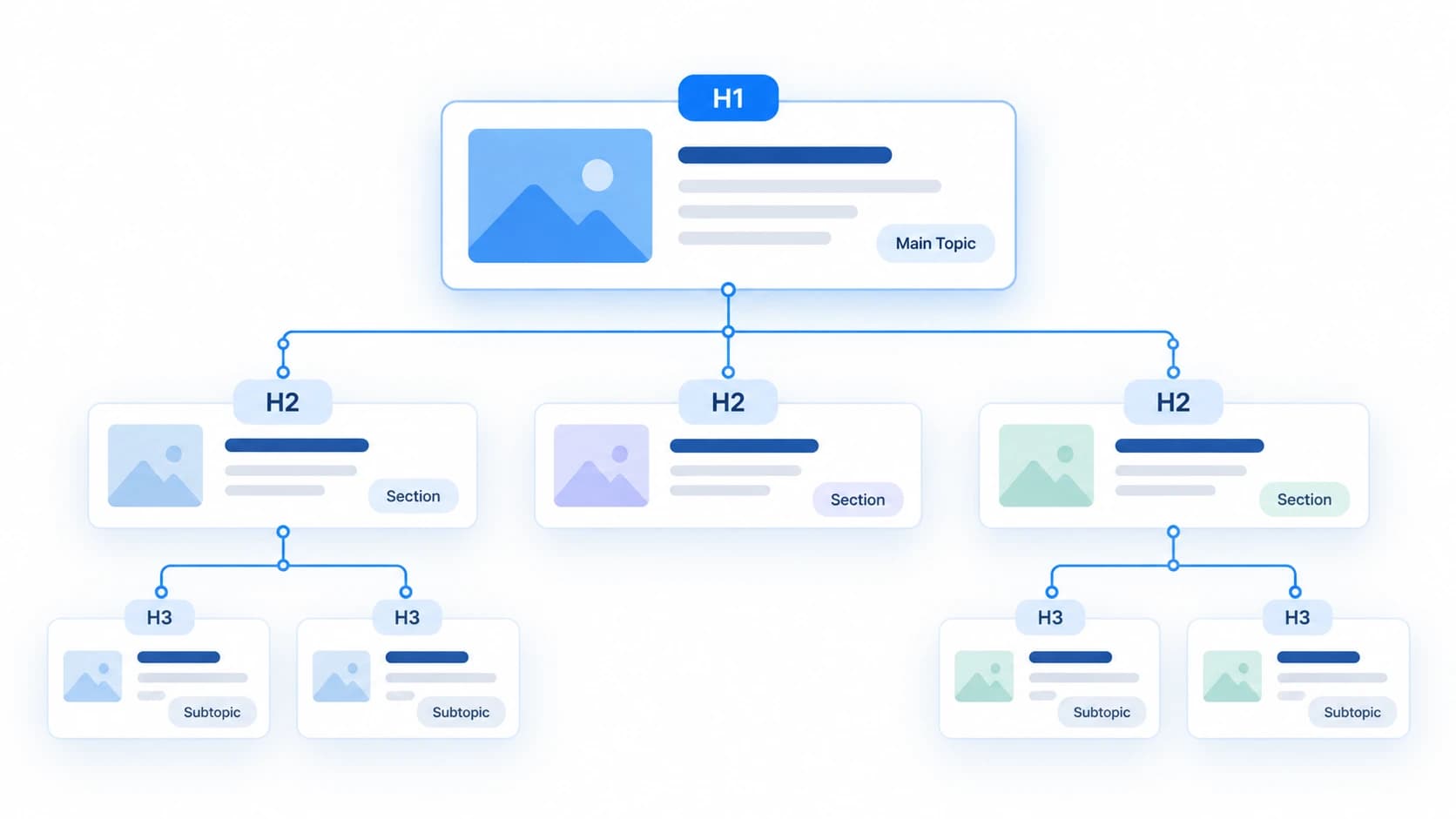
Confirm each page has exactly one H1, with H2s and H3s nested logically underneath it, and that every heading describes what the section beneath it actually covers. View your page's source to see the heading structure the way a machine reads it, not just how it looks visually.
A common failure is styling text to look like a heading with CSS while the underlying HTML tag is a plain paragraph, which is invisible to anything reading the markup rather than the rendered page.
Clarity: Service Descriptions
Each core service or product should have its own page, or at minimum its own clearly headed section, with a specific description rather than a one-line bullet shared with several other offerings. Check whether someone could tell your services apart from a competitor's using only the text on each page.
The common failure is a single "Services" page listing ten offerings in one paragraph, none described in enough detail to stand on its own.
Clarity: FAQ Content
Check for a genuine FAQ section with real, commonly asked questions and direct answers, not a disguised list of marketing points. If FAQPage structured data is present, confirm it matches the visible text on the page exactly.
A common failure is an FAQ section whose questions are really just section headers in disguise, or structured data that has drifted out of sync with what visitors actually see after an edit.
Identity: Name, Address, and Contact Consistency
Confirm your official business name, primary address or service area, and contact details are stated in visible, plain text, and match exactly across your homepage, footer, and any structured data. Copy the name, address, and phone number from three different pages on your own site and compare them character by character.
The common failure is small, easy-to-miss inconsistencies: "St." on one page and "Street" on another, or a slightly different business name in the footer than in the header.
Identity: Clickable Contact Details
Confirm a working phone number and email appear in clickable, visible text, not only inside a contact form, and that your service area or physical address is stated explicitly rather than implied by a map embed alone. Click every phone number and email link yourself to confirm they actually work.
A common failure is contact information that exists only as an image or only inside a form, with no plain text a system can extract.
Identity: External Consistency
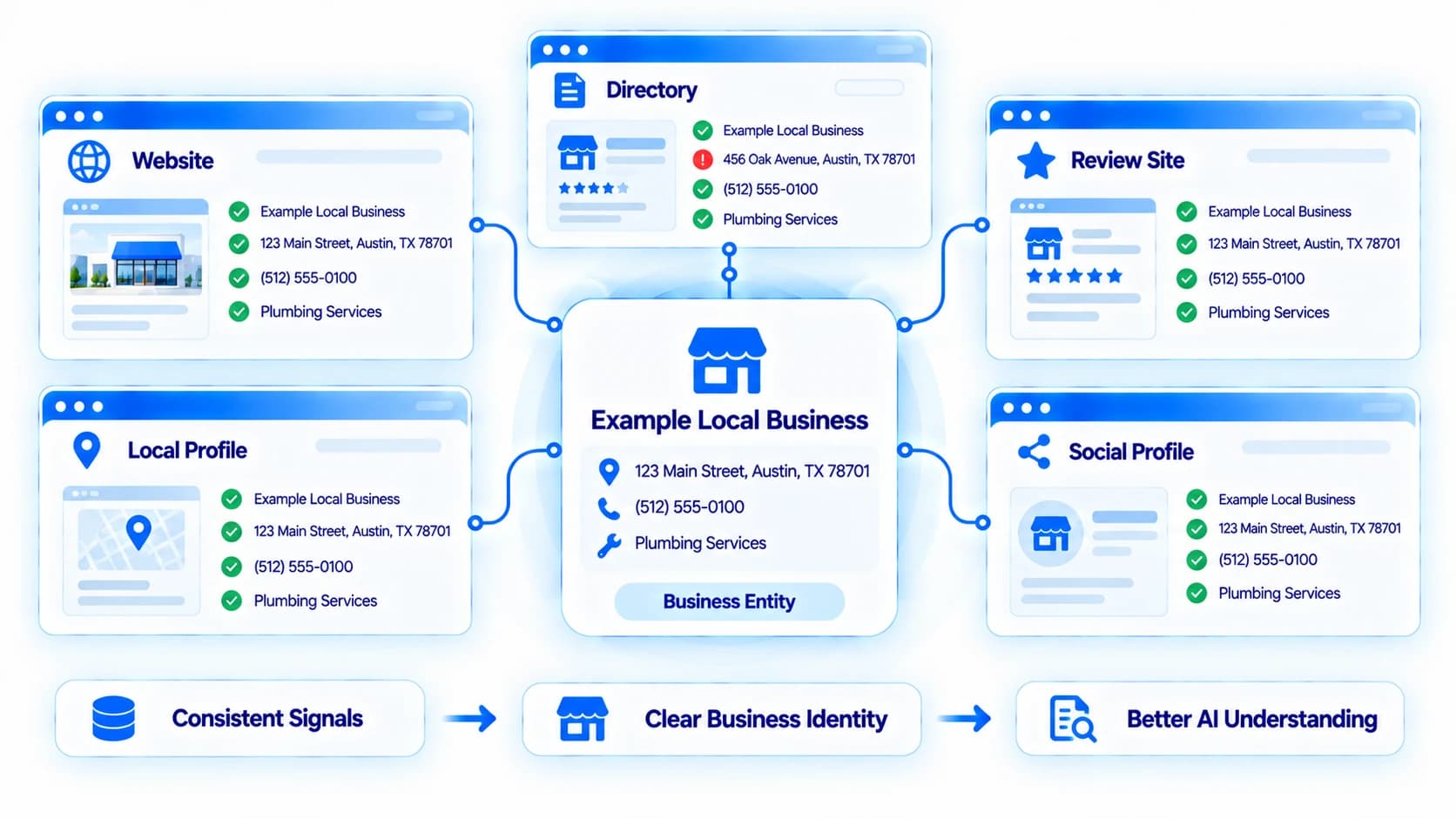
Search your own business name and compare what external directories, review platforms, and social profiles say against what your own website states. Fix any mismatches you find, starting with the ones that get the most traffic or visibility.
The common failure is a business that moved, rebranded, or changed its phone number, then updated its own website and never went back to update its Google Business Profile or other directory listings.
Trust: Credentials and Policies
Check that credentials, licenses, certifications, and policies (privacy, terms, refund) are published as crawlable text on your own site, not locked inside a scanned PDF or an image of a certificate. Confirm each policy page actually exists and is linked from your footer.
A common failure is a licensed or certified business that shows its credentials in a photo of a wall plaque but never states them anywhere in the page's actual text.
Expertise: Demonstrated Experience
Check whether your site states years in business or team experience, attributes articles or guides to a named author or expert, and publishes case studies or detailed outcomes rather than vague success claims. Search your own site for phrases like "years of experience" or "expert team" and confirm each one is backed by a specific number, name, or example rather than standing alone. This is separate from trust signals like policies and certifications: it's specifically about demonstrated knowledge and experience.
The common failure is generic claims such as "years of experience" or "trusted experts" with no specific number, name, or example behind them.
Discoverability: Site Structure and Navigation
Check that navigation is logical, that related content is grouped together, and that a stranger could find your core pages (services, about, contact) within a couple of clicks from the homepage. Click through your own site as if you'd never seen it before and count the clicks to each important page.
A common failure is an orphan page: a real, useful page with no link pointing to it from anywhere else on the site.
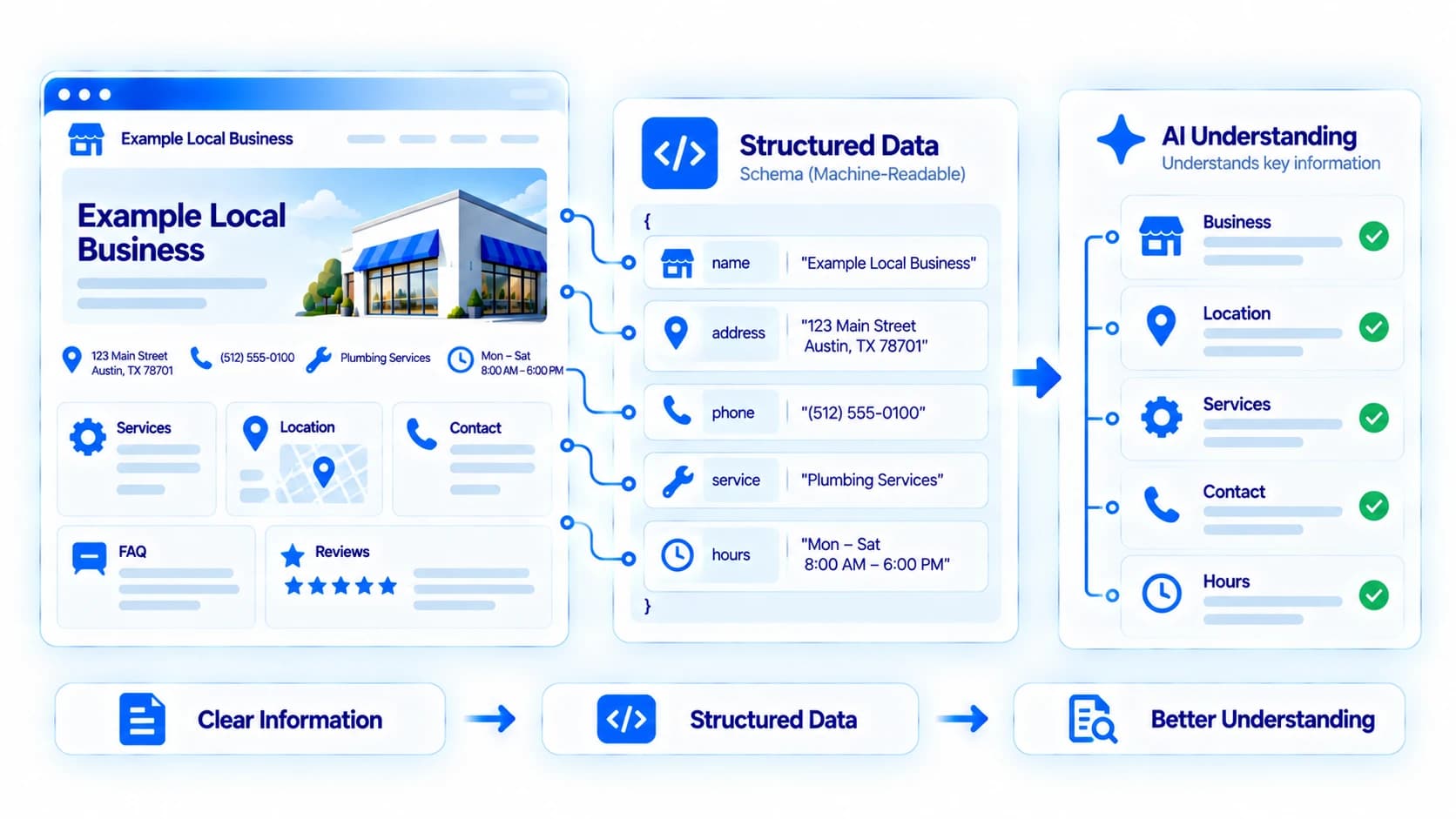
Discoverability: Structured Data
Review your Schema.org markup (Organization, LocalBusiness where relevant, Service, FAQPage) and confirm it reflects your actual visible content rather than describing something that isn't there. Run your key pages through a free schema markup validator to catch syntax errors.
A common failure is valid-looking JSON-LD that was copied from a template and never updated, so it describes a different business name, address, or set of services than the page around it.
Discoverability: Internal Linking
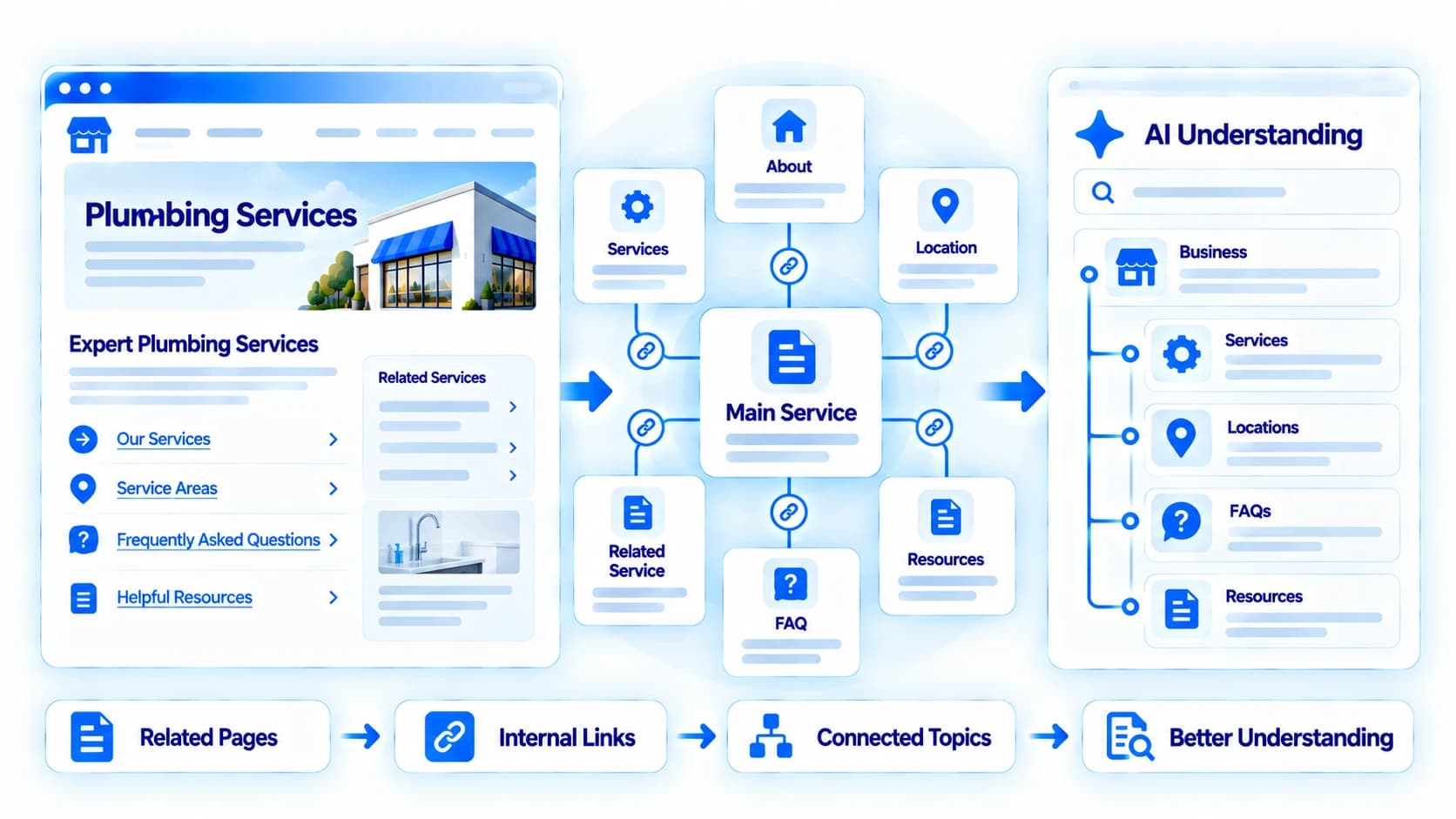
Confirm related pages link to each other with descriptive anchor text, helping both human visitors and automated readers understand how your content connects. Anchor text like "our services" says less than anchor text like "custom cabinet installation."
The common failure is a site where every internal link is generic ("click here," "learn more") with no indication of what's actually on the other end.
Implementation Checklist for Web Teams
Key action items to work through before assuming automated systems can find what they need:
Clarity
- Specific, answer-first content in place of abstract marketing language.
- One H1 per page with logically nested H2s and H3s.
- A genuine FAQ section with direct answers matching any FAQPage schema.
Identity
- Business name, address/service area, and contact details stated consistently in visible text.
- Details match external directories and profiles exactly.
Trust
- Credentials, licenses, and policies published as crawlable text.
Expertise
- Years in business, named authorship, and case studies stated specifically, not generically.
Discoverability
- Logical navigation with no orphan pages.
- Structured data reflects actual visible content.
- Descriptive internal link anchor text.
For B2B Businesses
Some of these checks apply differently for B2B companies without a single physical storefront. "Service area" may mean the industries or regions you serve rather than a driving radius, and "contact information" may mean a sales team rather than a walk-in location, but the underlying check (is it stated in plain, specific text?) still applies. Expertise signals tend to matter more here: B2B buyers often read case studies and technical detail before a first conversation, so it's worth spending extra attention on that category specifically.
What This Checklist Doesn't Tell You
Everything above is something you can check directly on your own website. None of it tells you whether an AI system has actually mentioned or cited you, which is a different question you can only answer by asking AI systems directly and recording what they say.
Why a Dedicated Audit Tool Is Useful
Working through twelve checks manually, especially across a multi-page website, is genuinely time-consuming, and easy to do inconsistently between one review and the next. This is the practical case for a dedicated tool: AI Citation Analysis runs this same kind of check automatically, scores it across the five C-I-T-E-D categories, and gives you a repeatable baseline to measure future changes against.
Frequently Asked Questions
How long does a manual AI visibility audit take?
For a small website, a basic pass through this checklist may take an hour or two, while a larger multi-page site can take considerably longer. The time depends mainly on how many pages need to be checked and how much cross-page consistency you need to verify.
How is this checklist different from an automated audit?
This checklist is something you work through by hand, page by page. An automated audit, like the one AI Citation Analysis runs, checks the same kind of signals across C-I-T-E-D's five categories in minutes and gives you a repeatable score to compare against later, without replacing the judgment calls a manual review still requires.
Final Takeaway
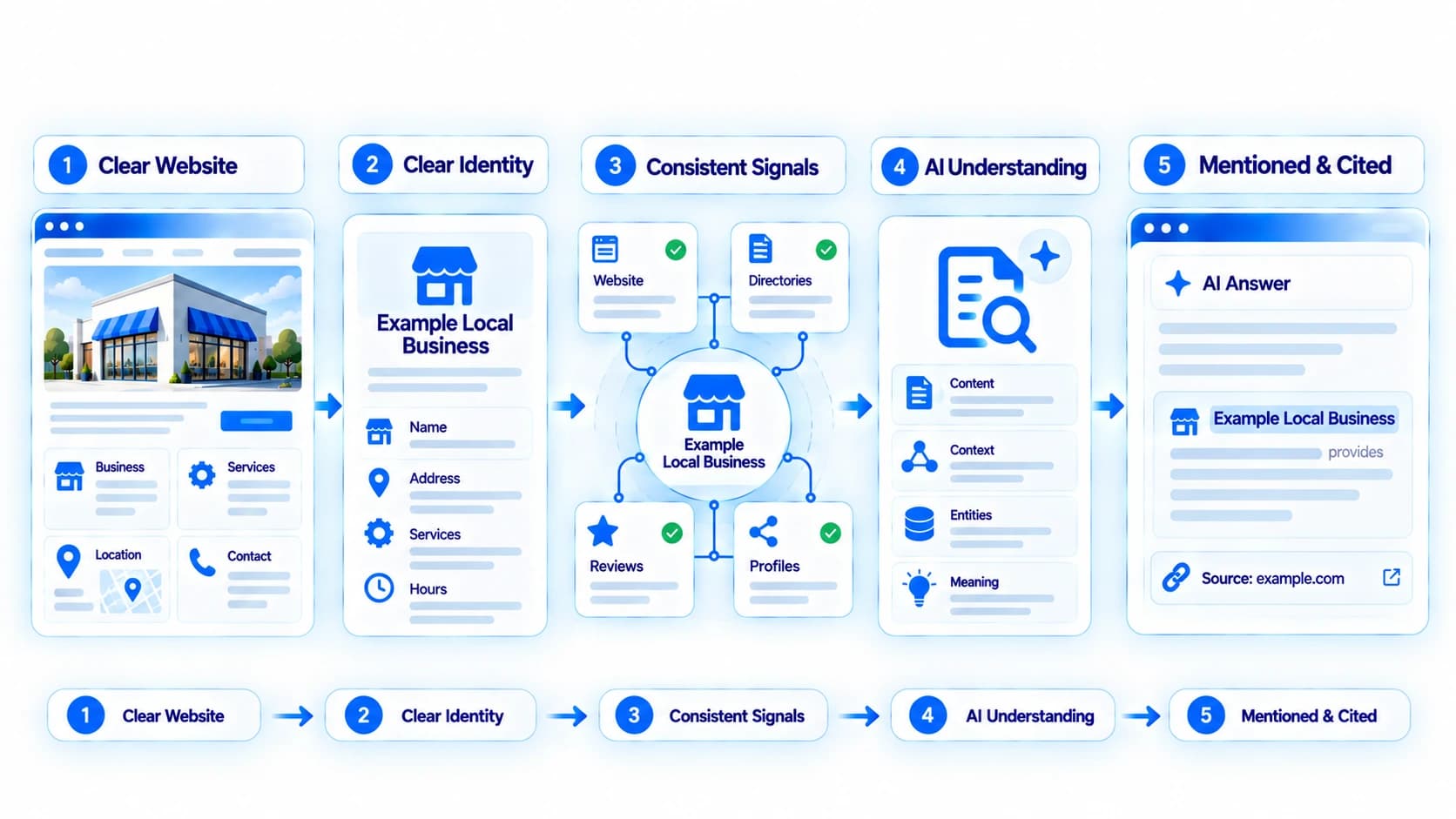
A thorough AI visibility audit doesn't require guessing at a specific AI provider's internal ranking logic. It requires working through a concrete list, grouped by what it actually affects (clarity, identity, trust, expertise, and discoverability), rather than treating "AI visibility" as one vague concept.
Do that consistently, on your own site and periodically afterward, and you'll have addressed the concrete, checkable factors that are within your control. What happens after that, whether a specific AI system actually surfaces or cites you, isn't something any checklist, including this one, can promise.