AEO vs SEO: What's the Difference?
Where answer engine optimization overlaps with traditional SEO, and where the two genuinely diverge.
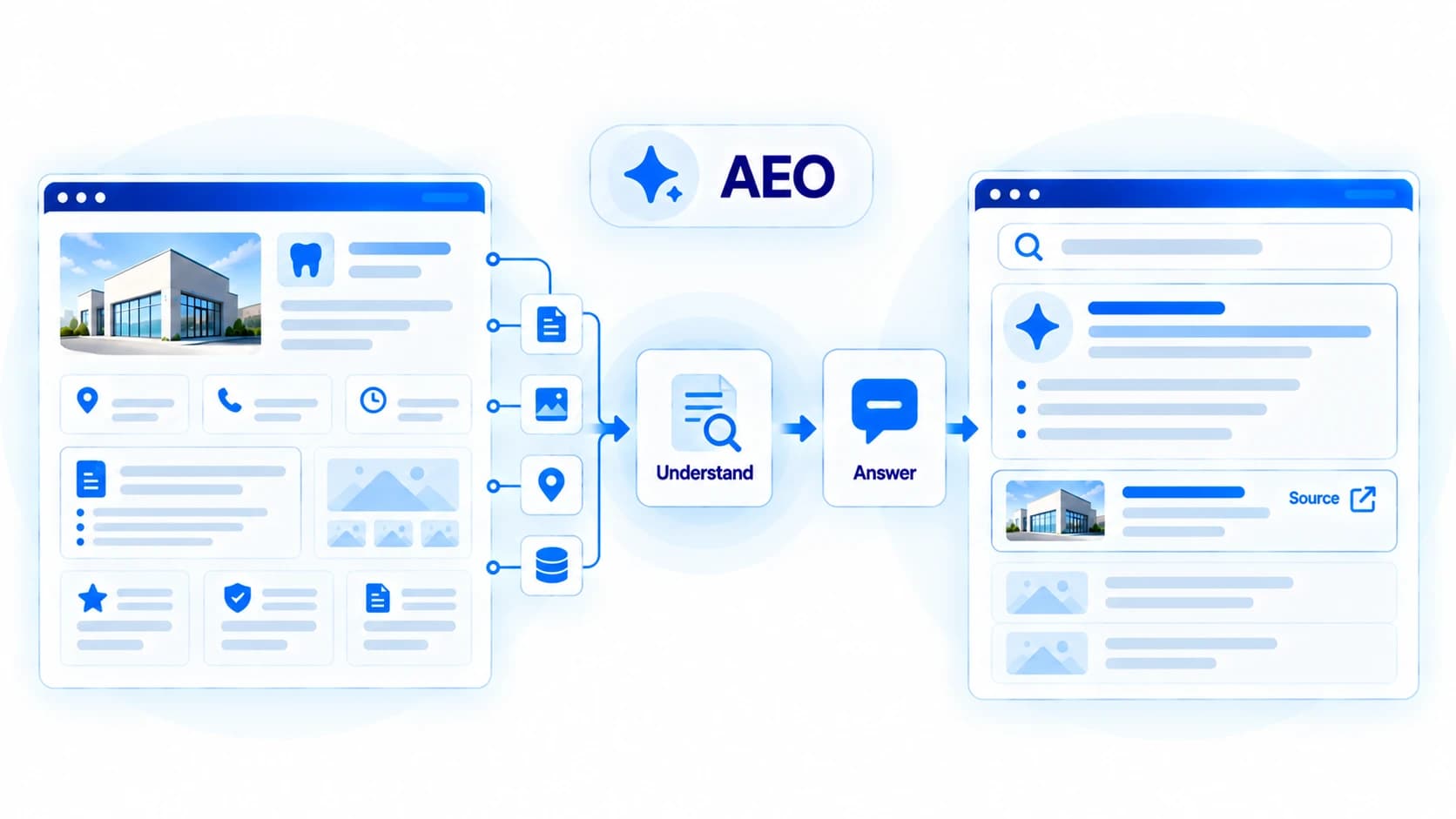
Answer engine optimization, AEO, gets described online as everything from a rebrand of SEO to a completely separate discipline. Neither framing is quite right. AEO shares real DNA with SEO, and in practice, most of the work overlaps. The difference is in what each one is ultimately optimizing for.
This article lays out the actual overlap and the actual divergence, without treating AEO as a replacement for the SEO work your site still needs.
What Is Answer Engine Optimization, Really?
Answer engine optimization is a practitioner term for making a website's information easier for AI-powered answer systems to retrieve, interpret, and potentially use when generating answers, including systems such as ChatGPT, Perplexity, and Google's AI features. It isn't an official framework published by Google, OpenAI, Microsoft, or any other AI provider; no major provider documents "AEO" as a formal system or a specific set of ranking requirements. It's an industry name for a cluster of practices, the same way "SEO" itself started as an informal term before the industry settled on it.
That distinction matters, because AEO advice varies widely in quality. Google's own guidance on third-party SEO tools and services suggests checking AEO and GEO claims against official documentation rather than taking a vendor's word for it, including ours. This article tries to do exactly that.
What Traditional SEO Optimizes For
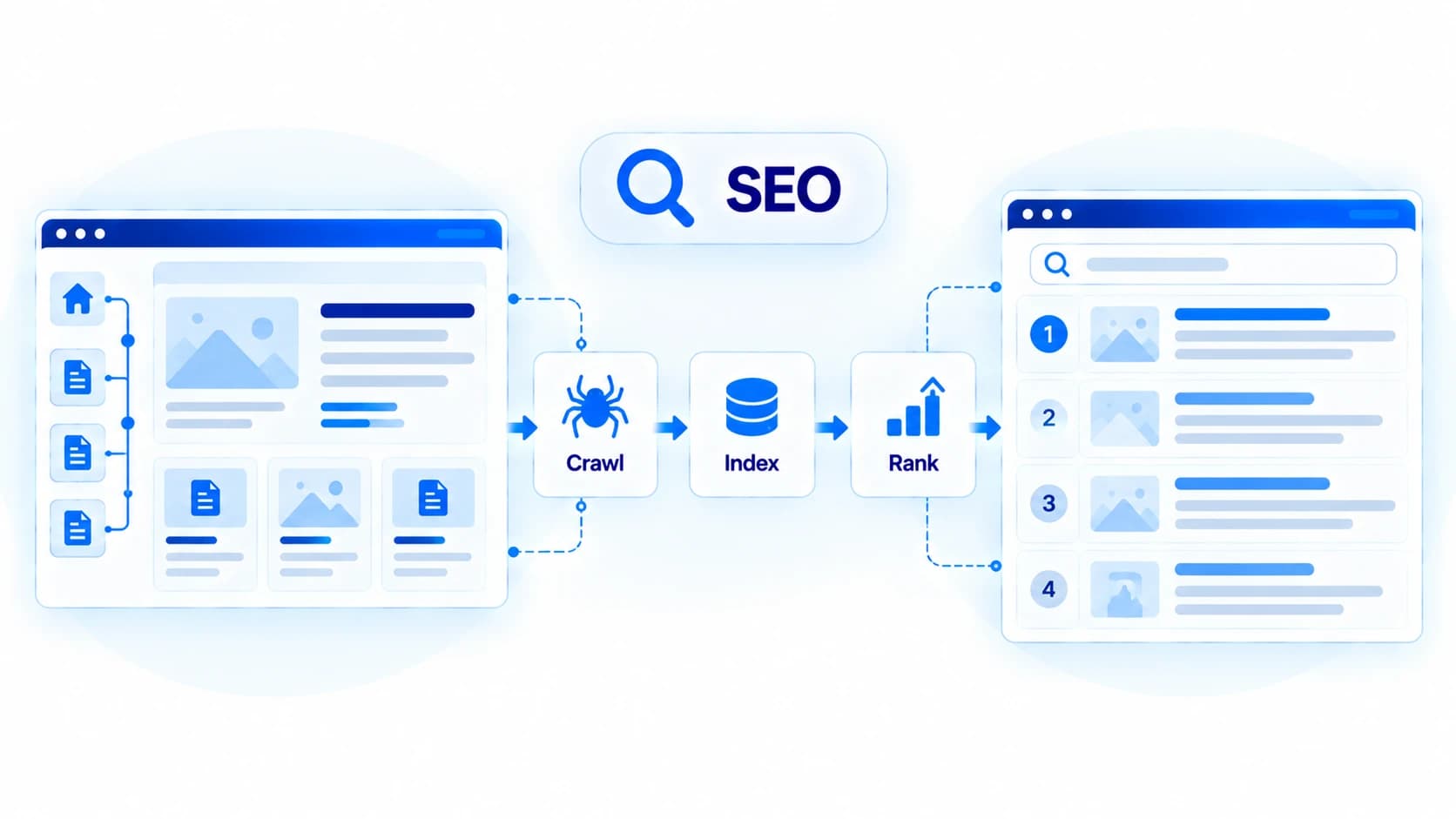
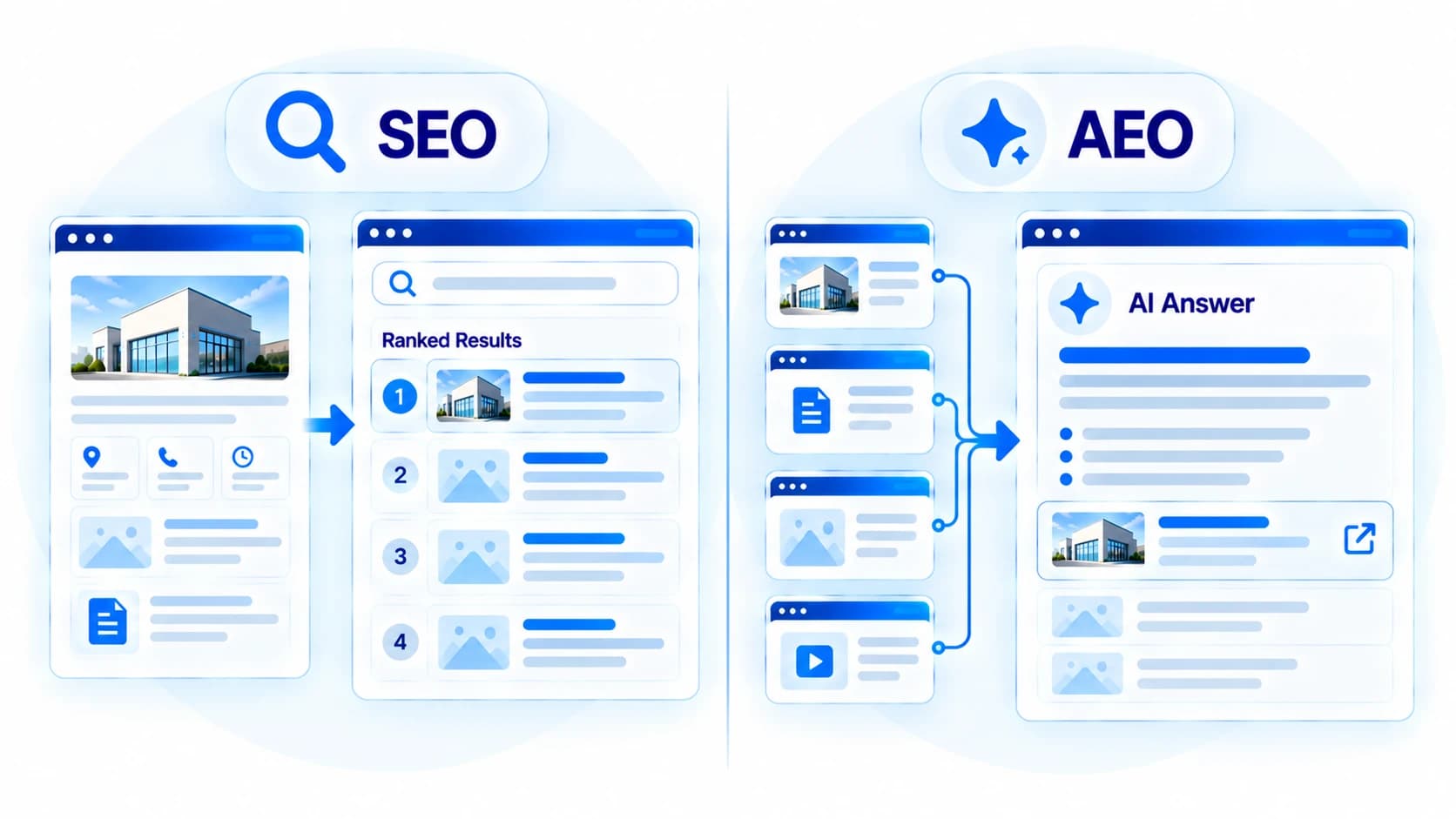
Search engine optimization is built around a search engine's job: matching a query to the most relevant, authoritative pages, and presenting them as a ranked list of links. SEO work (keyword targeting, backlink building, technical performance, and content depth) is aimed at earning a strong position in that list, because position drives clicks.
What Answer Engine Optimization Optimizes For
Answer engines don't return a list of links as the primary output; they return a synthesized answer, sometimes with citations attached. AEO is the practice of making your content easier for that synthesis step to use: stating facts explicitly, structuring content around direct questions and answers, and making entity identity unambiguous, so that if the system does need a source, yours is a clear candidate.
The goal shifts from "rank for this keyword" to "be the clearest, most citable source for this specific question."
Where AEO and SEO Overlap
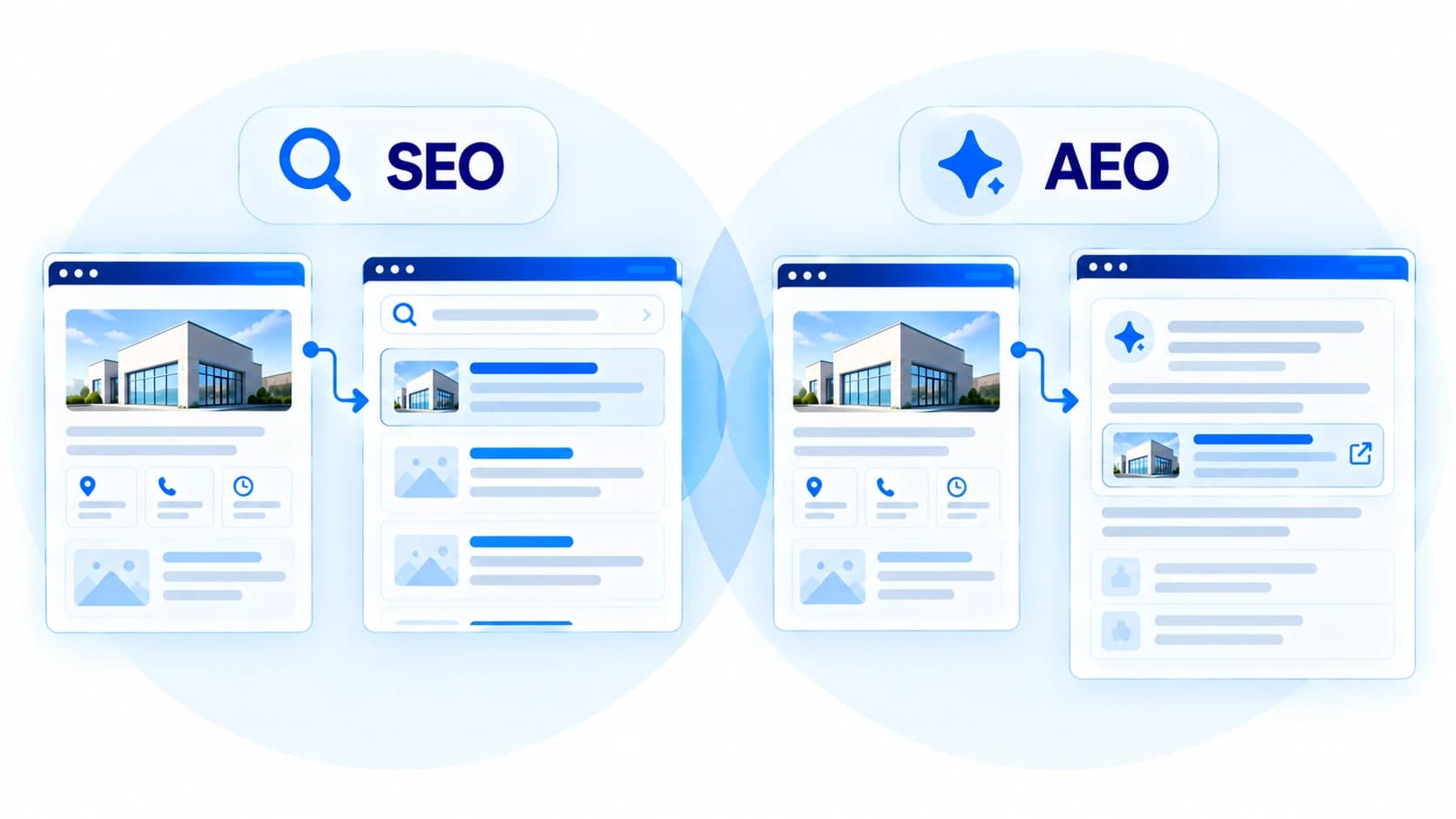
The overlap is larger than most discussions suggest. Both reward genuinely useful, well-organized content. Both benefit from clean technical fundamentals: fast loading, crawlable pages, working links. Both benefit from topical depth over thin, generic pages. A site that's already doing solid SEO work has already built much of the foundation AEO needs.
Where the Two Genuinely Diverge
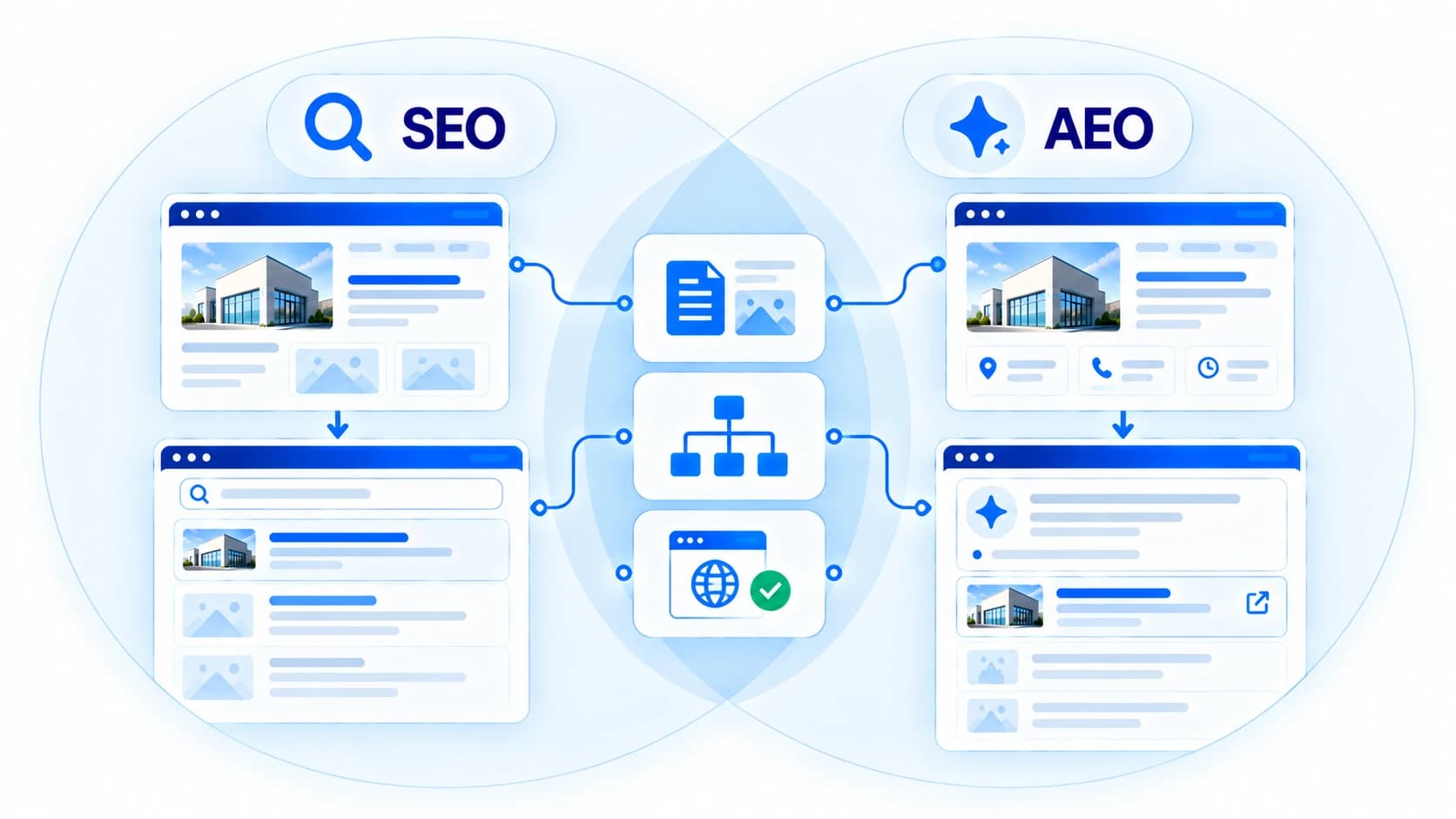
SEO still rewards backlink authority and historical ranking signals in ways that don't map cleanly onto how AI answer systems retrieve and select sources for a specific query, and that mapping isn't the same across providers. Microsoft has documented that its Copilot and Bing AI surfaces favor clear structure, direct question-and-answer content, and concise, self-contained answers. Google, on the other hand, has said its own AI-powered search features are rooted in the same core Search ranking and quality systems, not a separate AEO-specific ruleset, so "AEO" isn't a documented Google ranking factor distinct from ordinary SEO fundamentals. Which framing applies depends on the specific system, since providers don't behave identically.
Entity clarity, an unambiguous business name, location, and identity, matters for both, but an answer engine that has to decide whether to name or cite a specific source arguably depends on it more directly than a traditional ranking algorithm does.
| Dimension | Traditional SEO Emphasis | AEO Emphasis |
|---|---|---|
| Primary output | Ranked list of links | A synthesized answer, sometimes with citations |
| Content shape | Broad topical coverage, keyword targeting | Direct, question-shaped sections; documented as helpful by some providers, not a universal requirement |
| Authority signal | Backlinks and domain history | Varies by provider: Microsoft documents structure and clarity as helpful; Google says its AI features use the same core ranking signals as regular Search |
| Success metric | Ranking position, click-through | Being understood and, sometimes, cited |
AEO Is Not a Replacement for SEO
Treating AEO as a reason to abandon SEO fundamentals would be a mistake. Traditional search remains an important discovery channel for businesses online, and the technical and content-quality work that supports SEO also supports AEO. The practical approach is additive: keep the SEO fundamentals, and layer in the structural changes (direct answers, clear entity identity, and genuine FAQ content) that specifically help answer engines.
Frequently Asked Questions
Is AEO different for Google than it is for other AI systems?
Yes. Google has said its AI-powered search features are rooted in the same core Search ranking and quality systems, not a separate AEO ruleset. Other providers, like Microsoft for Copilot and Bing, document specific content preferences, such as clear structure and direct answers, that don't necessarily apply to Google or any other system.
Is AEO a replacement for SEO?
No. Traditional SEO fundamentals (crawlability, technical performance, and genuinely useful content) still matter for every system discussed here, including AI-powered ones. AEO adds specific, structural changes on top of that foundation; it doesn't replace the foundation itself.
What can an AEO service or consultant not promise you?
A specific citation, mention, or ranking inside any particular AI assistant's answers. No provider publishes the exact mechanics behind source selection, so any claim of a guaranteed outcome should be treated with real skepticism.
Is AEO an official framework from Google or another AI provider?
No. It's an industry and practitioner term, not something any major AI provider has published as a formal system or standard. Advice sold under the AEO label should be checked against each provider's own documentation rather than taken at face value.
Do I need to choose between optimizing for search engines and optimizing for AI answers?
No. The overlap between the two is larger than most discussions suggest: clean technical fundamentals and genuinely useful content serve both. The practical approach is additive, keep the SEO work you're already doing, and layer in the specific structural changes that help answer engines, rather than treating it as a choice.
Final Takeaway
AEO and SEO aren't competitors. They're two lenses on the same underlying goal, being genuinely useful and easy to understand, pointed at two different kinds of systems: one that returns links, and one that returns answers.
Most sites don't need to choose between them. They need to keep doing the SEO fundamentals well, and add the specific, structural changes that make their content easier for an answer engine to extract and trust.
Sources
- AI features and your website · Google Search Central
- Guidance on third-party SEO tools, services and advice · Google Search Central
- Optimizing your content for inclusion in AI search answers · Microsoft Advertising