How to Increase Your Chances of Being Cited by AI Search Engines
What citation actually means in AI-generated answers, the honest, non-guaranteed ways to improve your odds, and what you can and can't measure afterward.
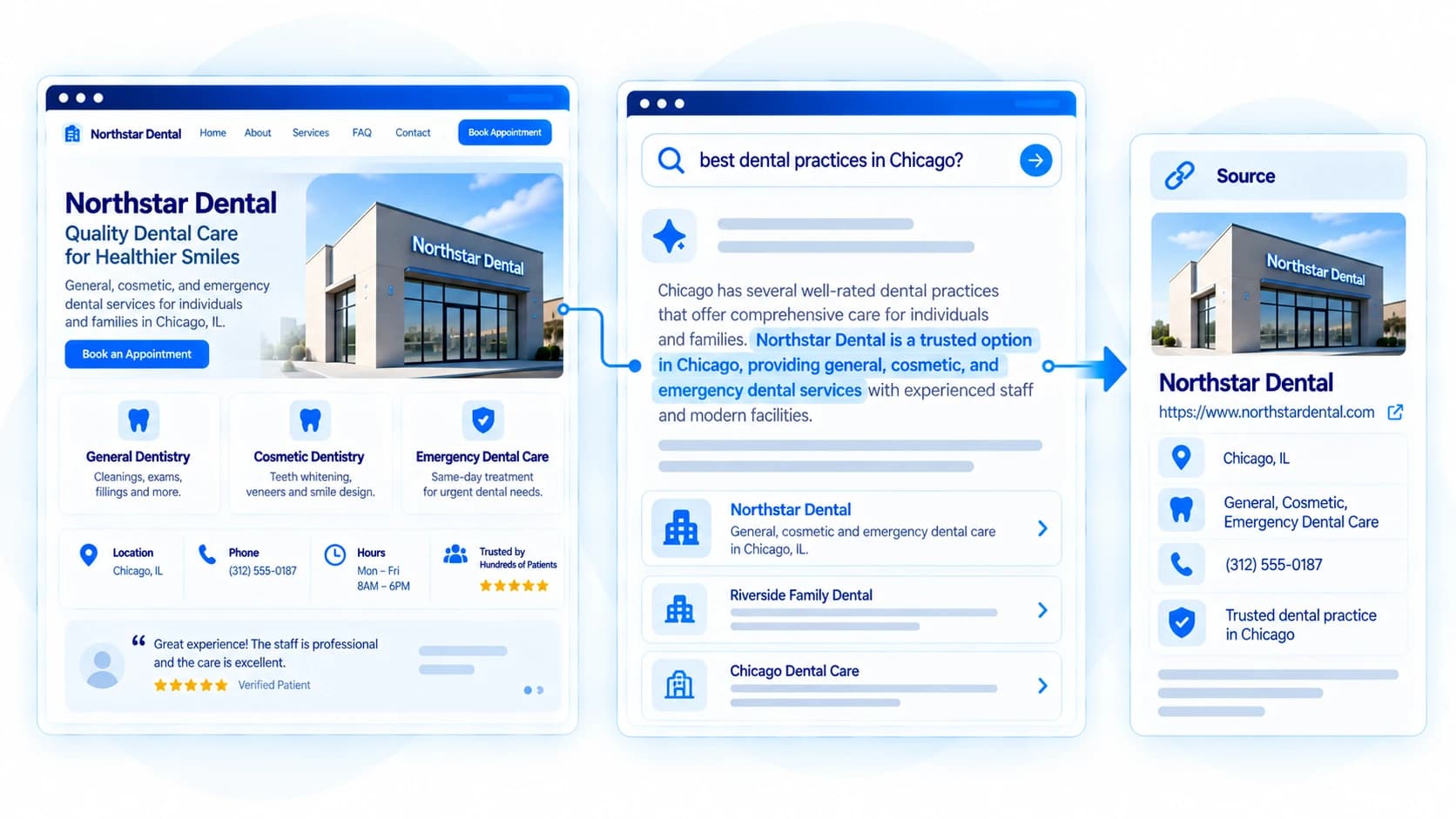
"How do I get cited by ChatGPT" is one of the most common questions business owners ask once they understand AI search exists. The honest answer starts by defining what citation actually means, because it's frequently confused with a few related but different outcomes.
This article draws those distinctions, then covers the specific, checkable steps that tend to improve your odds of being the source an AI system points to, not a general visibility checklist, and not a promise that any of it guarantees a specific result.
Being Indexed, Understood, Mentioned, and Cited Are Different Things
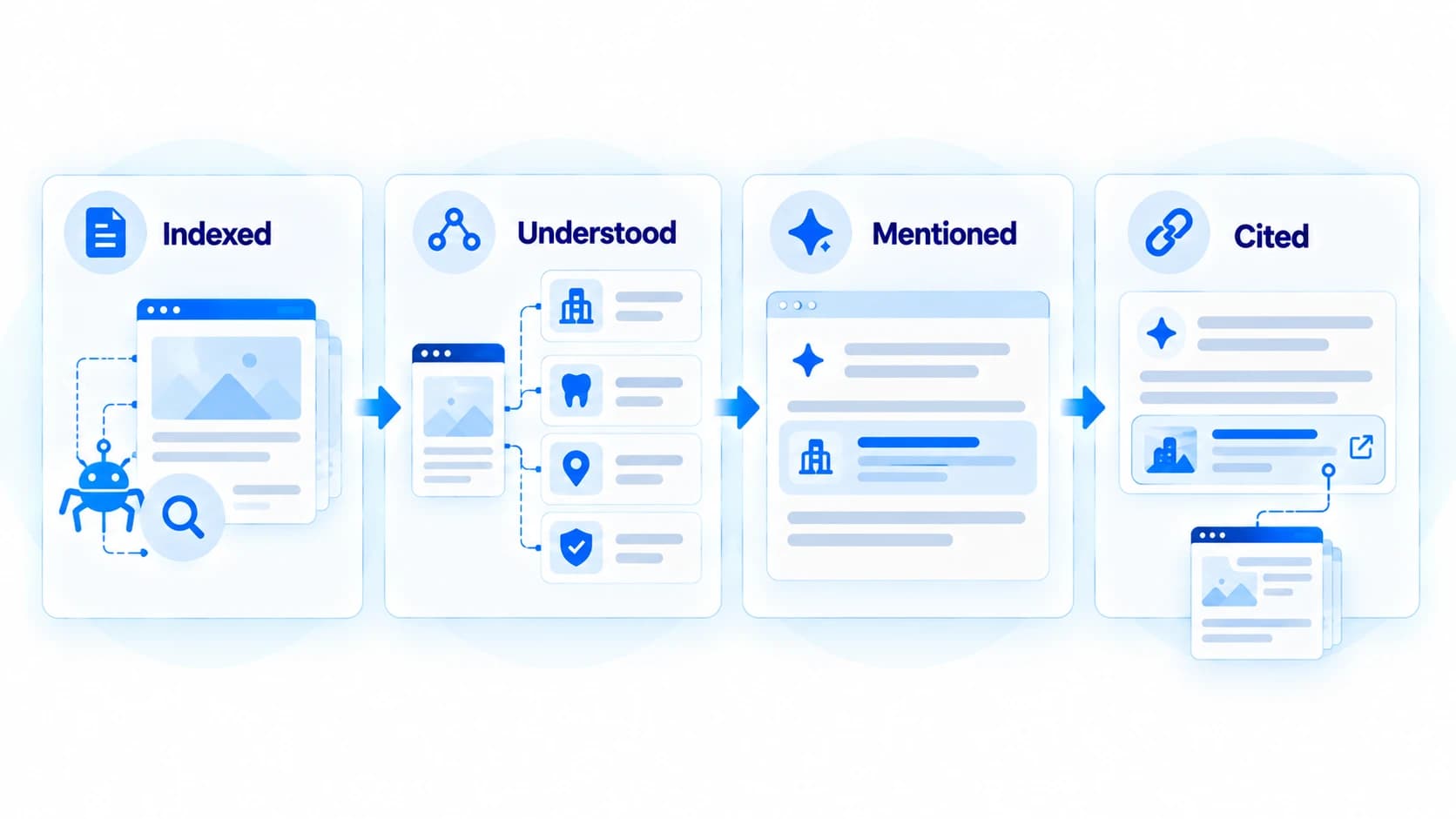
Being indexed means a crawler has found and stored your page; it says nothing about whether the content is clear. Being understood means an automated system can correctly resolve who you are and what you offer; it's possible to be indexed but poorly understood. Being mentioned means an AI system names your business or brand in an answer, often drawn from general knowledge rather than a live source. Being cited specifically means a generated answer links to or directly attributes a claim to your website.
A business can be indexed and even mentioned by name while never being cited, if the AI system can't find a clear, current, linkable source on the business's own site to attribute the claim to.
A mention shows an AI system recognizes your business. A citation means an answer attributes a specific claim to a specific page on your site.
What Makes Information Easier to Reference
Citable information tends to share a few traits: it's stated explicitly rather than implied, it's specific rather than general, it's current, and it's consistent with what independent sources say about the same business. None of these are secret techniques; they're the same qualities that make information easier for a human fact-checker to verify quickly.
Explicit statements matter because automated readers generally extract standalone facts more reliably than implied context. Specificity matters because a generic claim can't answer a specific question. Currency matters because static training knowledge decays; systems that retrieve live data need up-to-date pages to draw from. Consistency matters because conflicting information, even from your own site, can lower confidence in all versions of the claim.
Why You Can't Reverse-Engineer a Specific Model's Selection Process
Every major AI answer platform runs its own retrieval and synthesis pipeline, and none of them publish the exact mechanics behind source selection. Claims that a specific heading tag, a specific schema type, or a specific word count guarantees inclusion should be treated with real skepticism; they're rarely something the provider has confirmed, and pipelines change without public notice.
What's realistic is optimizing for the underlying qualities described above, clarity, specificity, currency, consistency, since those can improve your odds across every platform rather than gaming one.
State the Specific Fact That Could Actually Be Cited
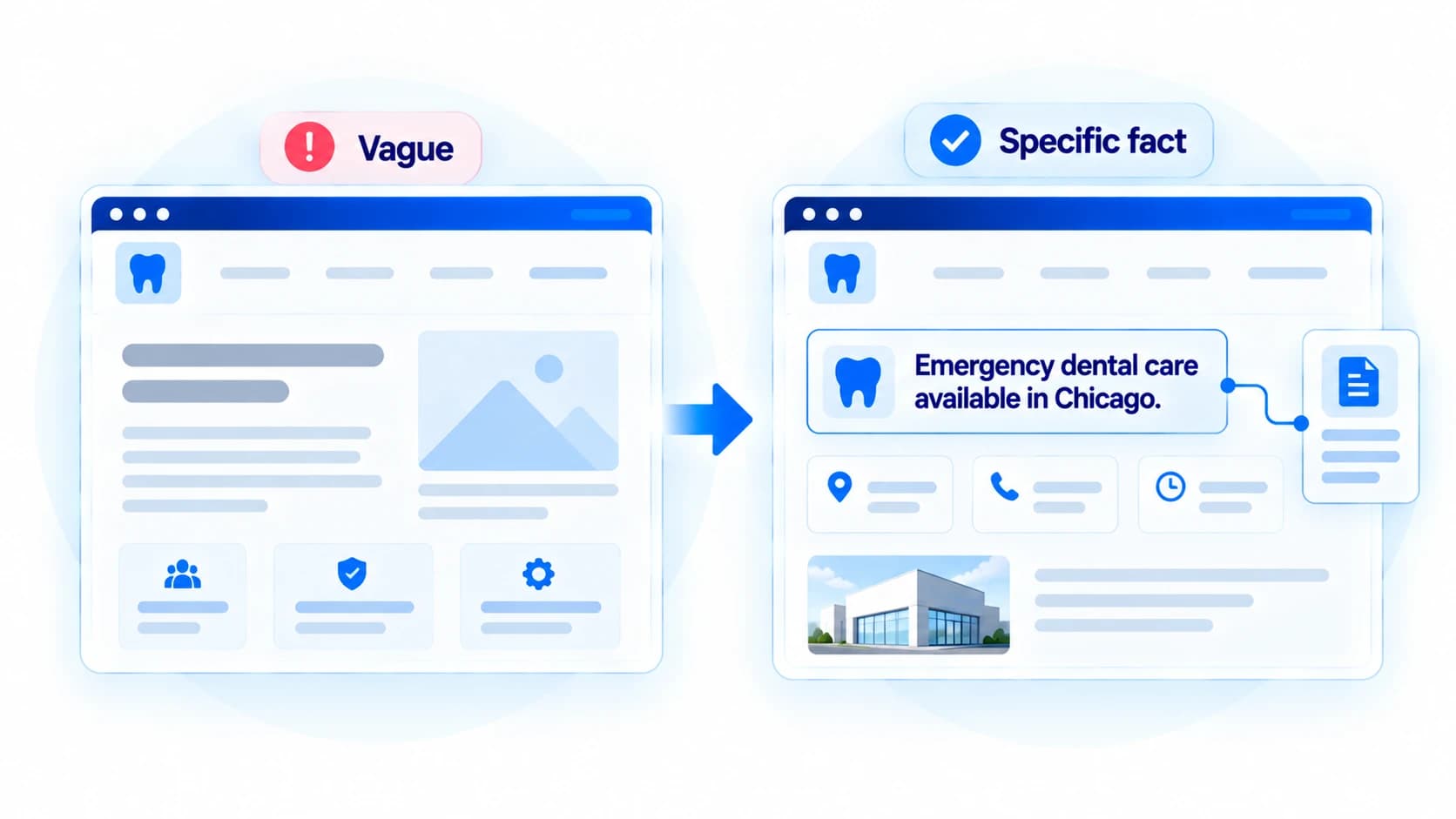
A citation attaches to a specific claim, not a general reputation. If the fact a system would need (a price, a certification, a service boundary, or a specific capability) isn't stated in plain text somewhere on your own site, there's nothing on your page for an answer to point to, however good your reputation is elsewhere.
Practical Copywriting Comparisons:
"We're known for excellent customer service."
An opinion, not a fact. There's nothing here a system could point to as the source for a specific claim.
"We offer a 24-hour response guarantee on all support tickets, documented in our published service level agreement."
States a specific, checkable commitment a system could actually cite as the source for that claim.
Corroboration Can Improve the Odds; It Doesn't Decide Them
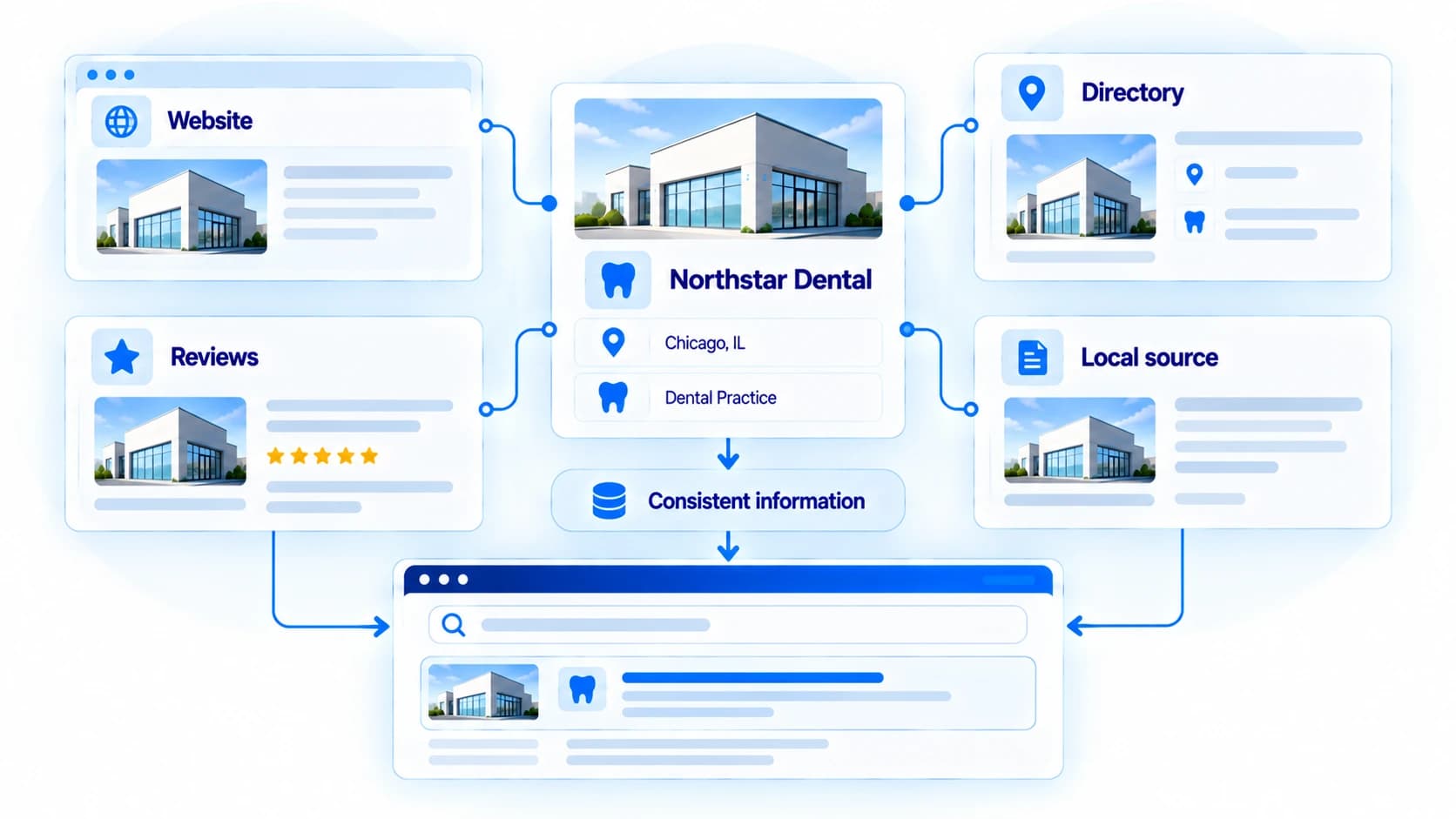
When multiple independent sources (reviews, directories, trade press) state the same fact your site does, a system has more reason to treat that fact as reliable, and your own page has more company vouching for it if the system checks. This can improve the odds a fact gets used; it doesn't decide which specific page ends up as the citation.
Hypothetical example: a landscaping company's own site says "licensed and insured," but no state licensing registry, review platform, or trade association page confirms it anywhere independently. A system has only the company's word to go on. The same claim showing up consistently on the company's site, a public licensing registry, and a couple of review platforms gives a system three independent reasons to treat it as reliable instead of one.
Don't manufacture this corroboration. Fake reviews, purchased mentions, or manufactured backlinks are easy to tell apart from genuine, independent coverage, and the risk outweighs any plausible benefit.
Keep the Citable Fact Current and Reachable
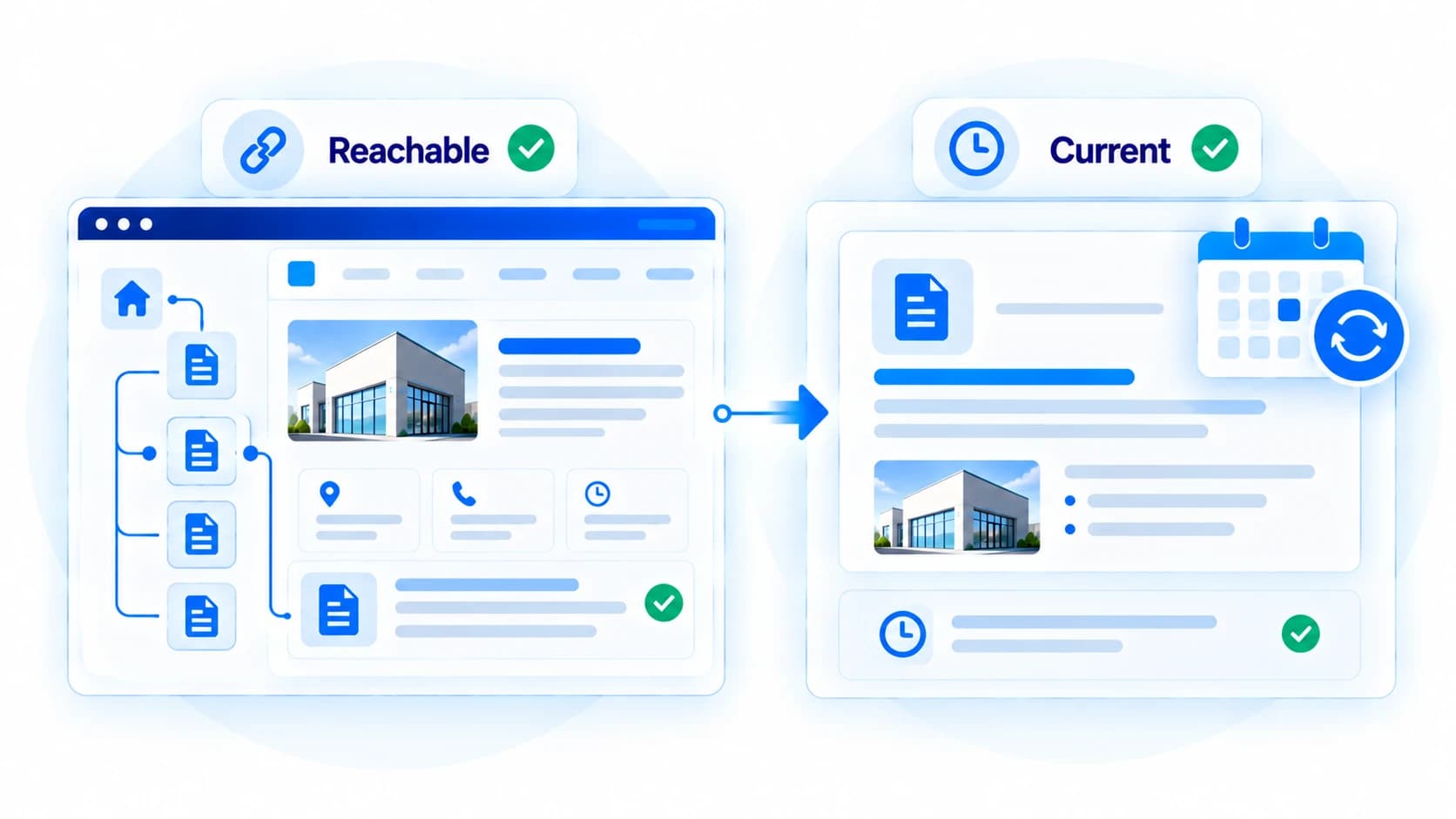
A fact that was accurate and citable six months ago but hasn't been updated since can become a liability rather than an asset. Static training knowledge decays, and systems that retrieve live data need a current page to find. Confirm technical access regularly too: a page that's fully accurate but temporarily unreachable (blocked by robots.txt, erroring, or dependent on JavaScript that doesn't render) can't be cited at all while that's true.
What You Can Actually Measure About Citations
Website-side readiness is something you can check directly. Whether a specific citation actually happened is a separate, narrower question, and the honest answer is that no single tool sees every provider's citation behavior. Some platforms report their own surface: Microsoft's Bing Webmaster Tools has an AI Performance report showing citation and grounding-query data specifically for Copilot and related Bing AI surfaces, and Google Search Console has a generative AI performance report showing impressions for AI Overviews and AI Mode. Neither covers the others, and neither confirms a citation from a provider that doesn't publish this kind of report at all.
A cleaner readiness score is not evidence that a citation occurred; it means the likely website-side obstacles are gone. Whether a specific assistant actually used your page on a specific query is a different check, one only repeated testing, manual or through a third-party monitoring tool, can currently answer.
How AI Citation Analysis Fits In
Everything above is something you can implement and check yourself. AI Citation Analysis runs a free scan that checks the same underlying readiness signals (entity consistency, specificity, evidence, and crawl access), so you can see where your own site is weakest before you spend time guessing.
The scan is a readiness check, not a citation guarantee. It doesn't query any AI assistant, so it can't show whether one has actually cited you.
Frequently Asked Questions
Can any tool see all my AI citations across every assistant?
No. Each platform that reports anything about citations only reports its own surface, and several providers don't publish this kind of data at all. There's no single, universal citation report covering ChatGPT, Claude, Gemini, Perplexity, and every other assistant at once.
Does AI Citation Analysis track my citations in ChatGPT, Claude, or other assistants?
No. It scans your own website for the readiness signals that make a citation more likely. It doesn't query any assistant and can't tell you whether one has actually cited you. That's a manual, repeated check, covered above.
If an AI assistant cites me once, will it cite me again for the same question?
Not necessarily. Retrieval results, model sampling, and even the exact phrasing of a question can all vary between runs, so a single citation isn't a guarantee of a repeat one. A pattern across several checks over time is more informative than any single result.
Is being mentioned by an AI assistant the same as being cited?
No. A mention means the assistant named your business, often from general knowledge, without necessarily linking to or attributing a specific claim to your site. A citation is the narrower, more specific outcome: a claim in the answer is actually attributed to your website.
Why might an AI assistant cite a competitor with a similar page instead of mine?
One common, checkable possibility is that their page states the specific fact more explicitly, more currently, or with more independent corroboration than yours does at the moment the system retrieves it. It isn't evidence of a documented ranking rule; it's a reason to check whether your own page states that same fact as clearly.
Final Takeaway
Increasing your chances of being cited starts with understanding that citation is a distinct, narrower outcome than being indexed or mentioned. You can't guarantee it, and any claim that you can should raise questions.
What you can do is make your website the clearest, most current, most consistent source available for the specific facts about your business. That's the same foundation that can improve visibility more broadly, applied to the one outcome that's actually worth calling a citation.
Sources
- About the generative AI performance report · Google Search Console Help
- Introducing AI Performance in Bing Webmaster Tools (Public Preview) · Microsoft Bing Webmaster Blog