What Is Generative Engine Optimization (GEO)?
A plain-language explanation of GEO: what it means, how it relates to AEO and SEO, and what's established versus still emerging terminology.
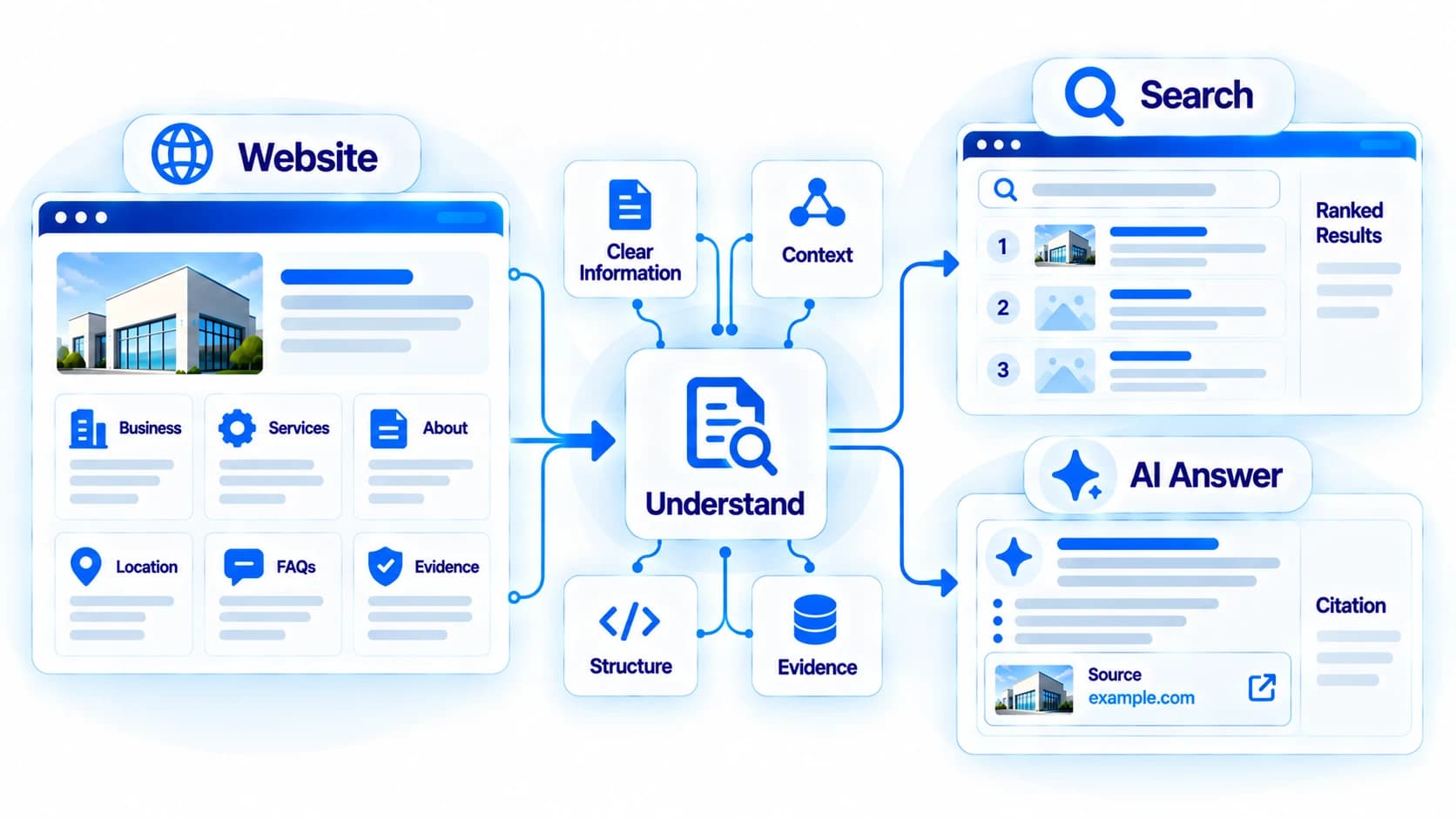
Generative engine optimization, GEO, is one of the newer terms circulating in AI search discussions, and it's often used loosely enough to mean several different things depending on who's writing. This article gives a plain-language definition, distinguishes it from the adjacent term AEO, and is explicit about which parts of this space are settled and which are still forming.
A Plain-Language Definition
Generative engine optimization refers to the practice of making a website's content easier for generative AI systems, tools that produce synthesized, written answers rather than a list of links, to find, understand, and draw from when constructing a response. "Generative search" is the broader category this practice serves: any search experience where the primary output is a generated answer rather than a ranked list of results.
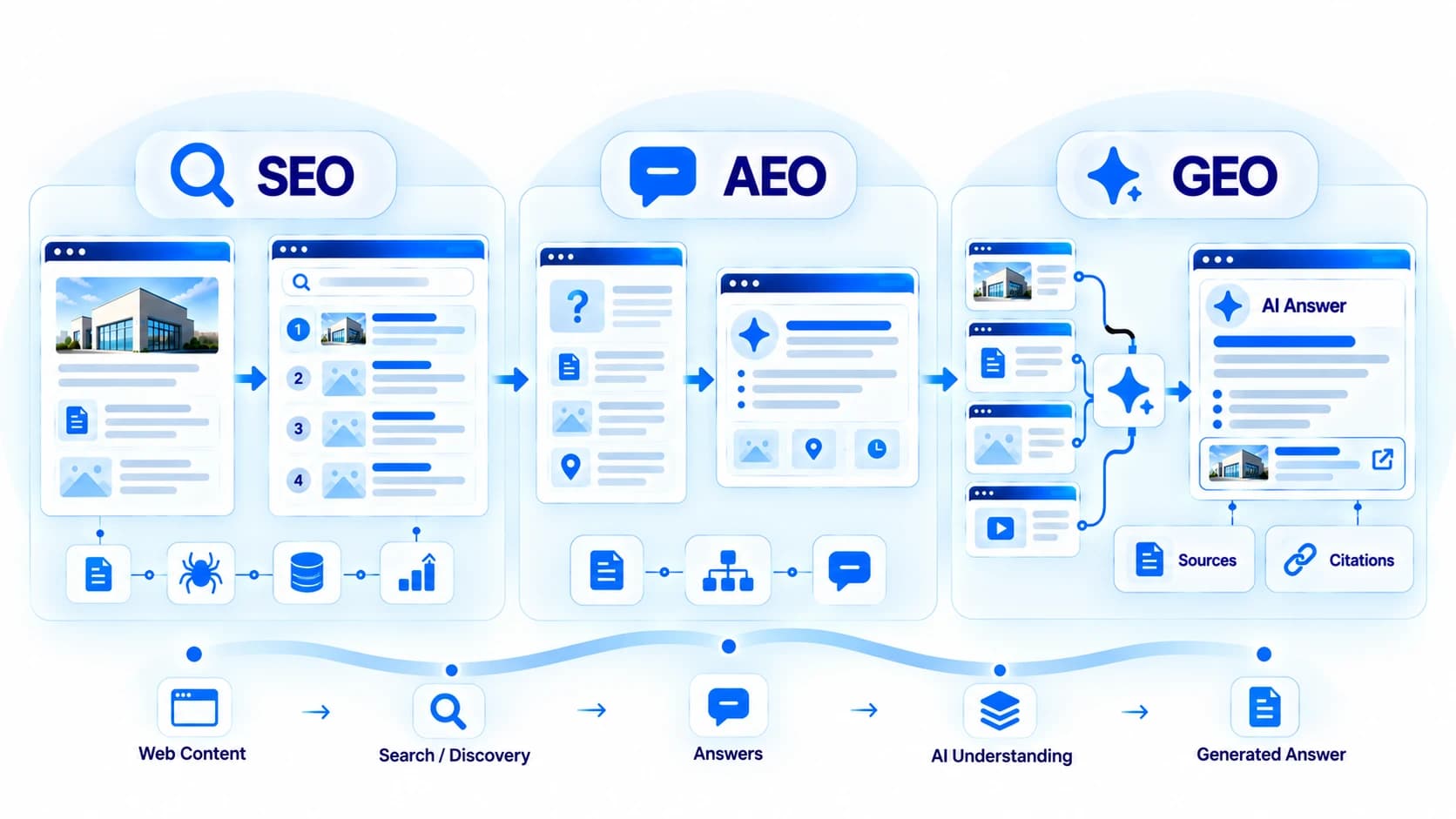
In practice, GEO overlaps heavily with AEO. Some practitioners use the terms almost interchangeably; others draw a narrower distinction where AEO focuses specifically on question-and-answer formats and GEO covers the broader discipline of optimizing for any generative synthesis step. Neither usage is universally agreed upon yet, which is worth acknowledging honestly rather than presenting one definition as the settled standard.
The term traces back to a 2023 research paper, "GEO: Generative Engine Optimization" by Aggarwal et al., later presented at KDD 2024, which coined it and tested a set of content changes against a benchmark the researchers built, GEO-bench. That paper reported visibility improvements of up to 40% from certain changes, though it also found the effect varies significantly by domain and technique. That's a research benchmark result under controlled test conditions, not a guarantee for any specific website or live AI assistant.
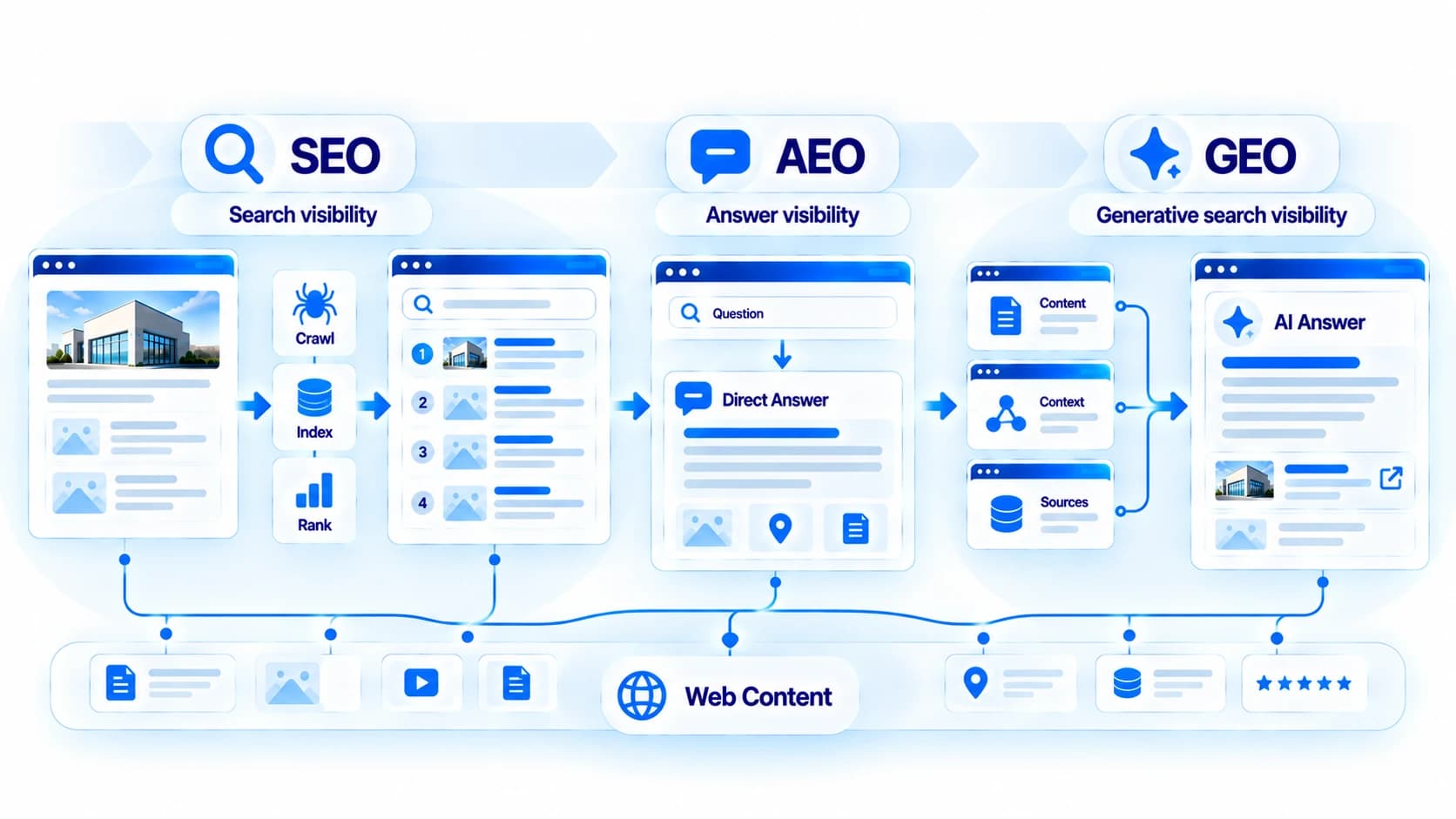
What GEO Actually Covers
Regardless of exactly where the line between GEO and AEO is drawn, the practical work looks similar: clear entity identity, so a generative system can resolve who you are without ambiguity; content clarity, meaning explicit facts rather than implied context; and supporting evidence, such as structured data and third-party corroboration, that reinforces what your site claims about itself.
Brand and entity visibility is part of this too: being unambiguously identifiable as a distinct business rather than easily confused with a similarly named competitor.

Citations, Mentions, and Measuring AI Visibility
As with AEO, GEO discussions often blur mentions (being named) with citations (being linked to or directly attributed). Measuring your own progress in this space realistically means checking readiness signals on your own site (entity clarity, content specificity, structured data accuracy, and crawl access) rather than trying to track a specific generative system's output over time, which no outside tool can do reliably or completely.

Established Concepts vs. Emerging Terminology
Some of what falls under "GEO" is well-established web practice with a new name: clean semantic structure, accurate structured data, and clear entity information have mattered for search and accessibility for years. What's genuinely new is the framing around generative synthesis specifically, and the terminology itself, GEO, AEO, and related terms, is still settling. Be skeptical of any claim that a specific ranking algorithm for generative engines is publicly documented; as of today, none of the major providers have published one. Google has been explicit on this point for its own AI features: it doesn't require special formatting, content chunking, or markup like llms.txt, and its generative AI features are rooted in the same core Search ranking and quality systems used for regular results, not a separate GEO-specific algorithm.
Frequently Asked Questions
Where does the term GEO come from?
It traces back to a 2023 research paper, "GEO: Generative Engine Optimization" by Aggarwal et al., later presented at KDD 2024, which coined the term and tested content changes against a benchmark the researchers built. It's an academic and practitioner term, not something coined or published by an AI provider.
Is GEO different from AEO, and is either an official framework?
They overlap heavily, and many practitioners use the terms close to interchangeably; where a line is drawn, GEO usually covers the broader discipline of optimizing for generative synthesis, and AEO focuses more narrowly on question-and-answer formats. Neither is an official framework published by Google, OpenAI, Microsoft, or any other AI provider; both are industry terms for a cluster of practices.
Can GEO guarantee AI citations, mentions, or rankings?
No. The research that introduced the term reported benchmark improvements under controlled test conditions, not a guaranteed outcome for a live website. No AI provider publishes the exact mechanics behind source selection, so any claim of a guaranteed result should be treated with real skepticism.
Does GEO require special AI-only content or markup?
No documented guidance from a major provider asks for that. Google has said it doesn't require special formatting, chunking, or markup for its own AI features. The same clear, specific, accurate content that serves a human reader is the foundation GEO builds on.
Is GEO worth pursuing separately from SEO?
Not as a separate project. The overlap between the two is large: clean technical fundamentals and genuinely useful, specific content serve both. Treat GEO-specific structural changes as additive to existing SEO work, not a reason to abandon it.
Final Takeaway
GEO, at its core, describes making your website's information and evidence clear enough for a generative system to interpret and potentially use, using much of the same foundation that already supports good SEO and AEO practice.
Treat the terminology itself as still evolving, and treat any specific, confident claim about a provider's internal ranking mechanics with healthy skepticism until it's actually documented.
Sources
- GEO: Generative Engine Optimization (Aggarwal et al., KDD 2024) · arXiv
- Google's guide to generative AI features in Search · Google Search Central
- AI features and your website · Google Search Central