How to Improve Your Brand's Visibility in AI Search Engines
The practical, checkable changes (business identity, content clarity, evidence, and access) that improve how AI systems interpret and use your website. No promise of a specific citation.
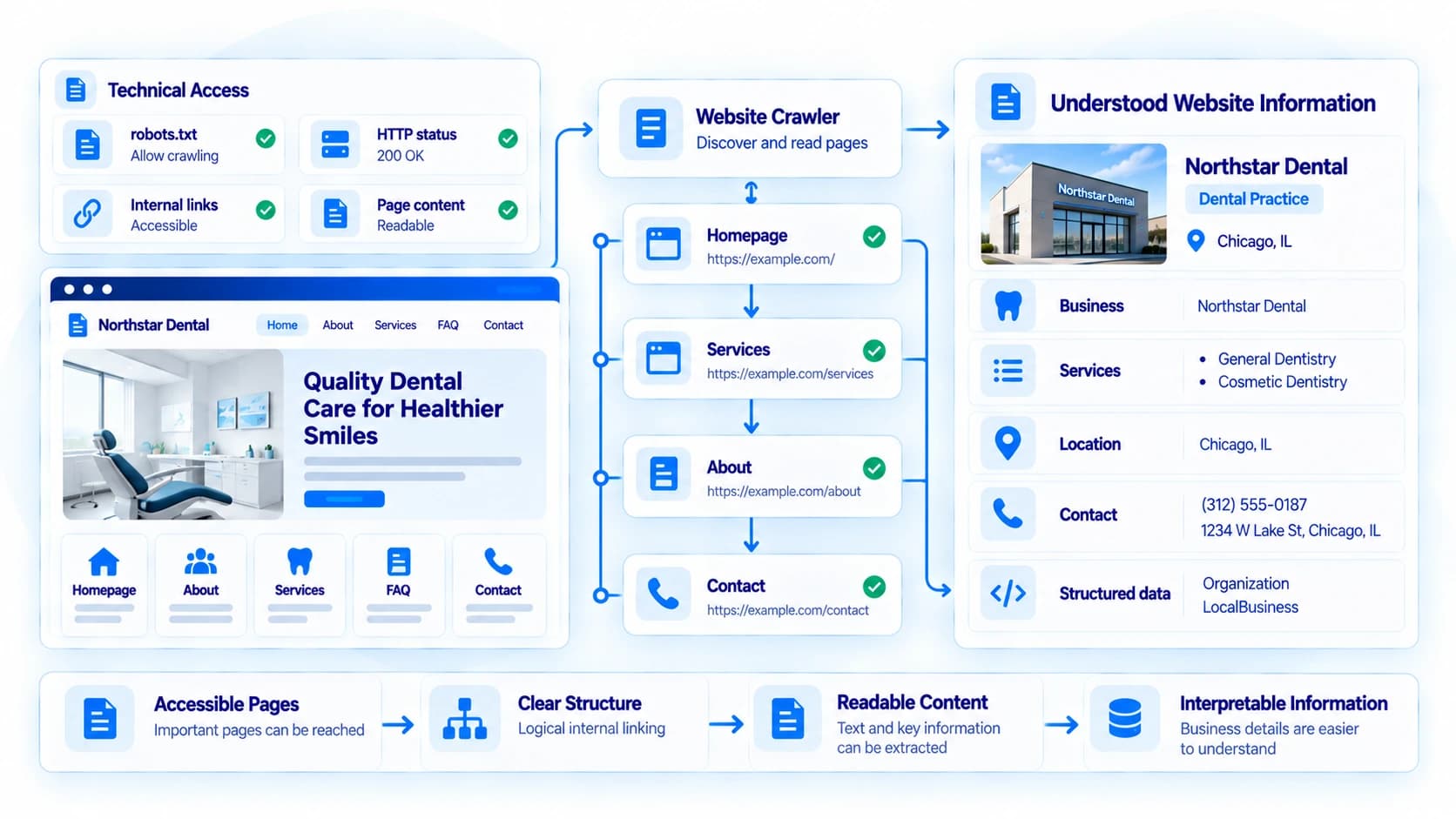
Improving your visibility in AI search means making your business and its important information clearer, more specific, better supported by evidence, and easier for automated systems to find and interpret, not chasing a specific model's algorithm. It can improve the conditions under which an AI system uses your website as a source. It cannot guarantee that any specific assistant will mention, recommend, or cite you.
Traditional search rewards ranking: earning a high position in a list of links for a given keyword. AI search rewards something closer to qualification: whether your website gives an automated system clear enough evidence to use with confidence, for whichever specific question someone actually asked. A page can rank well and still be a poor source if its facts are vague. A page can rank modestly and still be a strong source if it states a fact more clearly than anything else available.
This article covers what to actually change, roughly in the order it tends to matter most. It won't re-explain why AI visibility gaps happen or how to check whether anything worked; those are covered elsewhere.
Make the Business Entity Unmistakably Clear
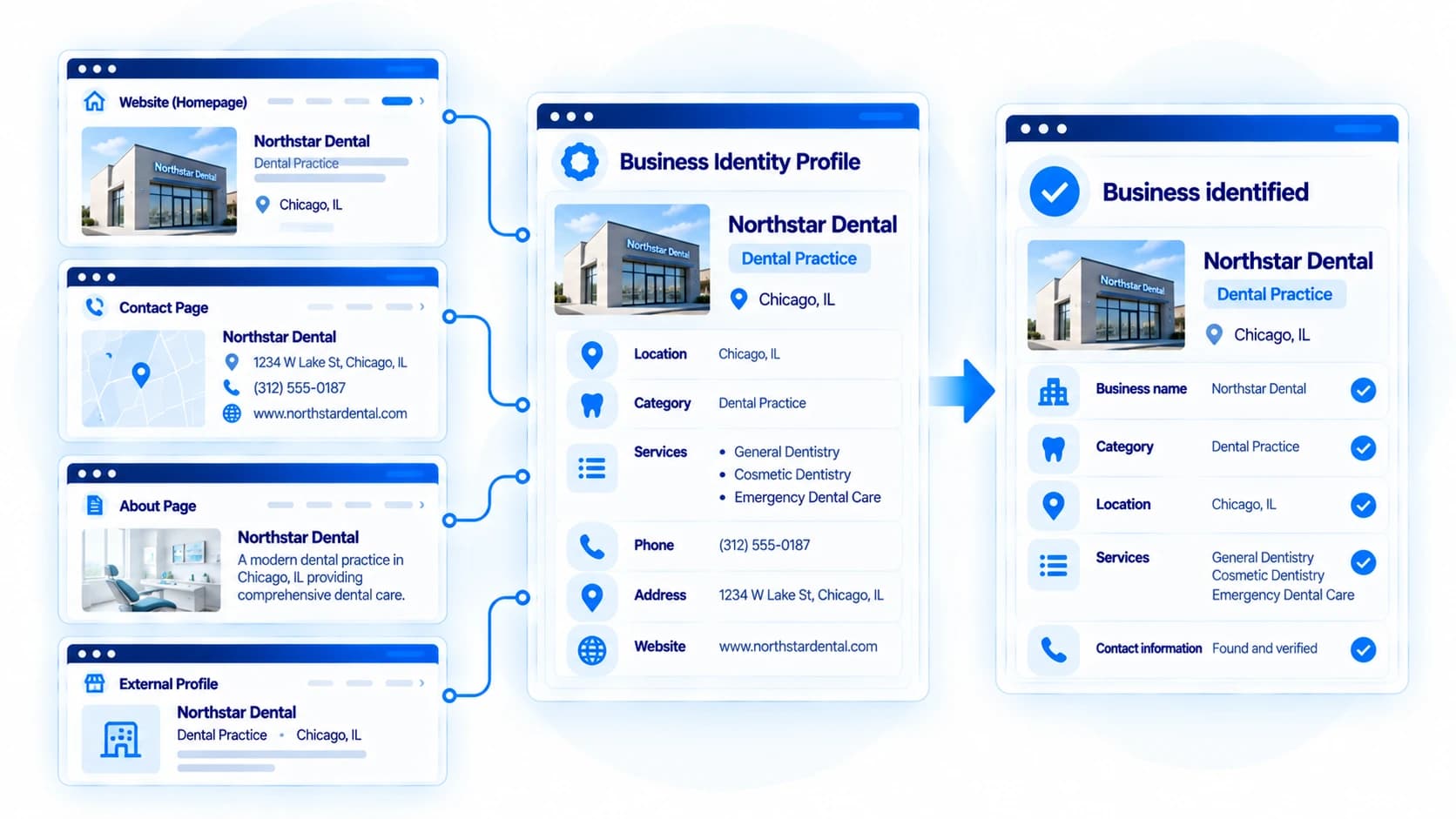
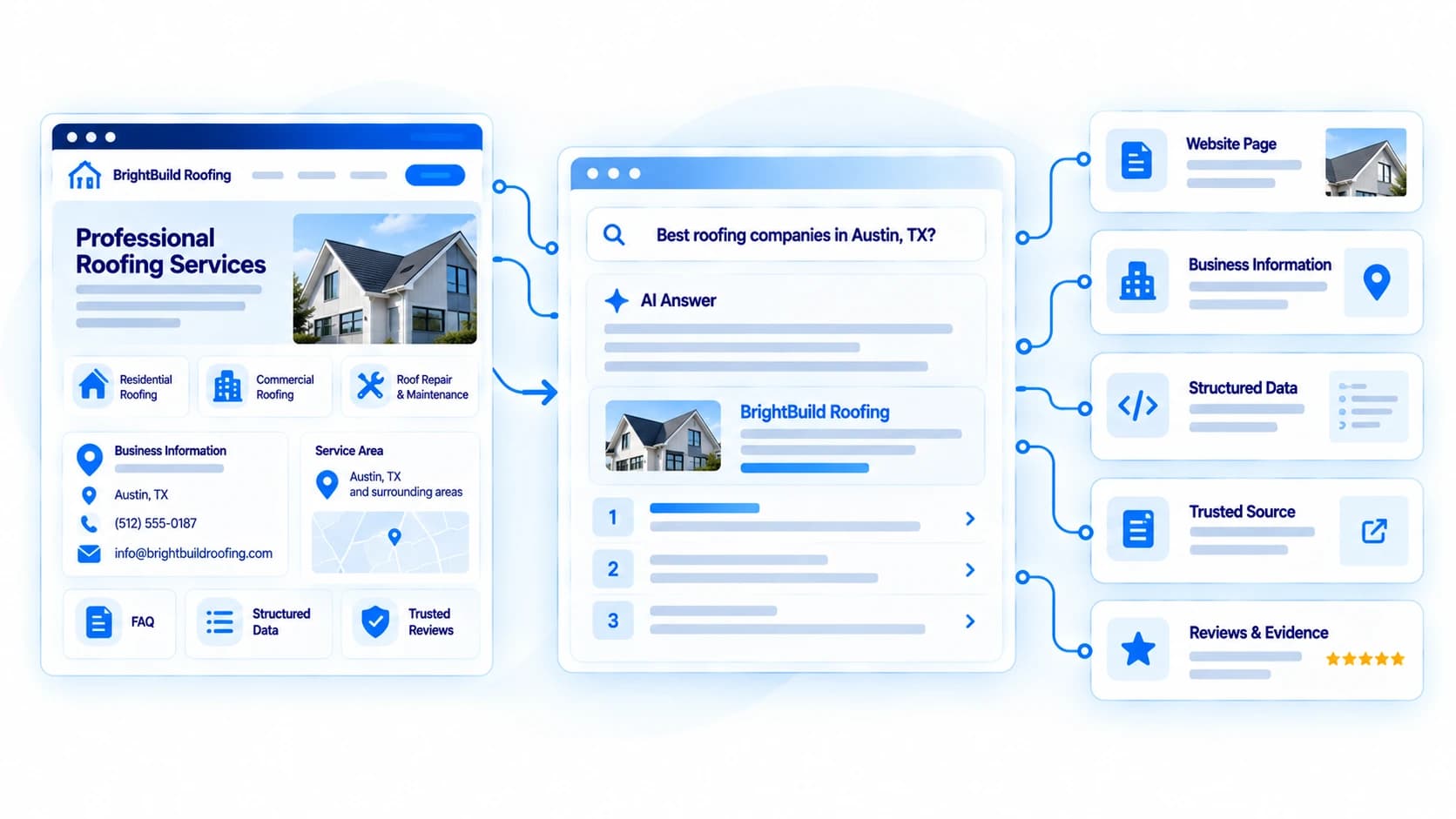
Before an automated system evaluates anything else, it has to resolve who you actually are: your official business name, organization type, location or service area, and contact details, stated in plain text, not only inside a logo image or a contact form with no visible details.
Clear and consistent information gives systems less ambiguity to resolve when interpreting a business. If your homepage, footer, and Google Business Profile each use a slightly different version of your name, or list different phone numbers, you've given an automated system a reason to hesitate before treating them as the same entity.
Hypothetical example: a business describing itself only as "we help businesses grow" gives a system nothing to resolve. "Acme Accounting provides monthly bookkeeping, payroll, and tax preparation for small businesses in Toronto" states the organization, the services, and the location as three separate, checkable facts.
Describe Services and Capabilities Specifically
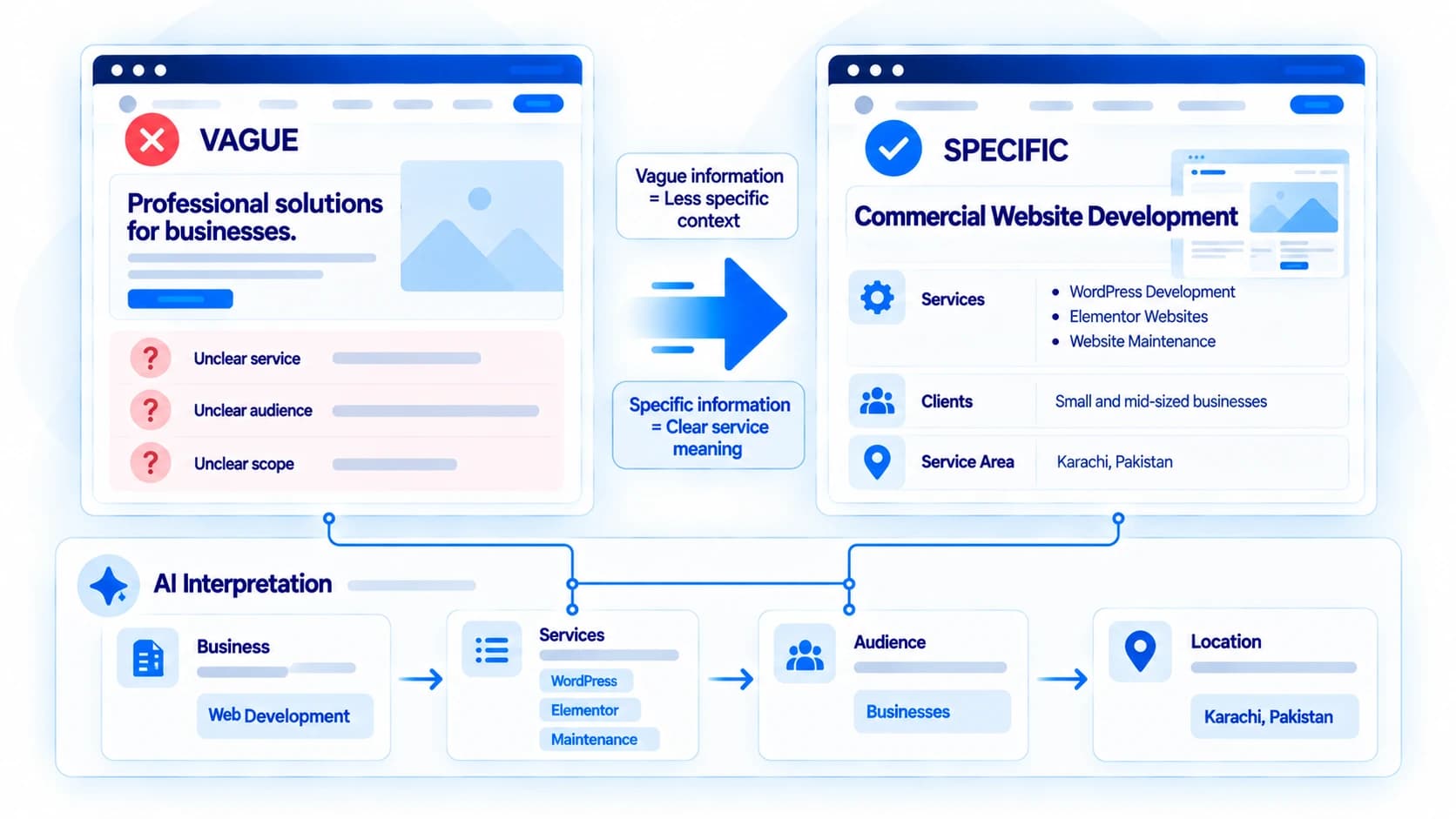
Abstract marketing copy is a common barrier to clear interpretation. Phrases like "innovative solutions" or "comprehensive support" name no fact an automated reader could turn into an answer to a real question.
State the specific service, the specific audience, and any real boundaries or limitations, in plain sentences. This isn't about repeating a keyword; it's about stating the actual facts of what you do.
Practical Copywriting Comparisons:
"We provide innovative solutions for modern businesses."
Could describe almost any company in any industry. Answers no real question.
"We provide immigration law services, including visa applications, green card petitions, and citizenship applications, for individuals and families in the greater Chicago area."
Names the specific services, the client type, and the location, three separate, checkable facts.
Strengthen Trust and Evidence
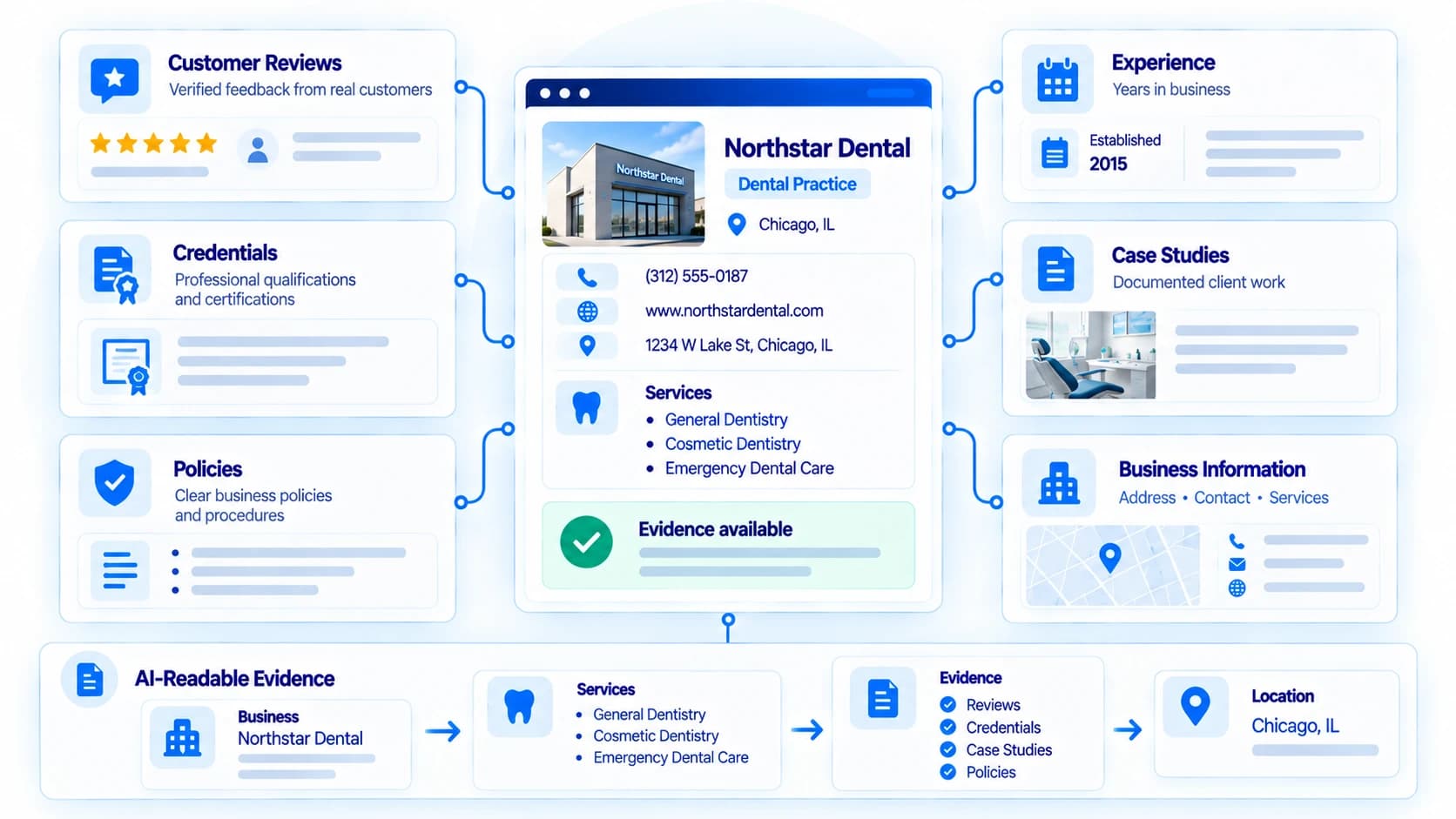
AI systems generally don't take a business's self-published claims at face value; retrieval-augmented systems are commonly designed to weigh corroborating evidence alongside what a site says about itself. Real credentials, certifications, documented case studies, clear policies, and genuine reviews all give an automated system additional reasons to treat a claim as reliable.
None of this means inventing evidence. Don't fabricate reviews, manufacture backlinks, or claim credentials you don't hold, and don't assume a specific number of external mentions is required; no provider documents a threshold like that. Keep first-party claims (what you say about yourself) distinguishable from independent evidence (what others say about you), and only include evidence that's actually real.
Demonstrate Real Expertise
Where relevant, show the depth behind your claims: who wrote a piece of content and what qualifies them, how long you've operated, what specific processes or methods you use, or a documented case study rather than a generic outcome claim.
The purpose is clearer attribution and real evidence of subject knowledge, not a specific technique for winning citations. Don't invent an author, a credential, or a case study that doesn't exist; a fabricated expertise signal is a bigger risk than a modest, accurate one.
Website Structure and Structured Data, Briefly
Clear heading hierarchy, direct answer-first writing, genuine FAQ sections, and structured data that mirrors your visible content all make a page easier to interpret. This is a large topic with its own dedicated guide; the short version is that organization should make each fact easy to locate, and markup should describe what's already stated in the text, not replace it.
Google has said structured data isn't required for its generative AI search features, and no major provider documents markup as something that determines whether a page gets used or cited. It reinforces clarity; it doesn't create it.
Make Sure the Content Is Actually Reachable
Everything above assumes an automated crawler can actually reach your pages. Technical access (robots.txt rules, JavaScript rendering, status codes) is its own detailed topic, covered step by step in the AI-readiness guide.
Strengthen the Context Beyond Your Own Site
Your website is only one part of the information environment an automated system might draw on. Legitimate business listings, professional directories, industry associations, and independent publications that mention your business consistently can provide additional context beyond what your own site claims.
Don't buy links, submit to spammy directories, or assume a third-party mention creates a citation somewhere else; the exact way any specific AI system uses outside sources isn't fully documented. Consistency across whatever legitimate presence already exists is the realistic goal, not manufacturing new mentions.
Keep Information Current
Services, locations, hours, pricing, team information, and policies change. An automated system has no way to know a page is stale unless the page itself is updated; outdated claims, discontinued services, and old statistics left in place are read as current.
This isn't about changing a date to look fresh; Google explicitly warns against that. It's about making sure what's on the page is still actually true.
What to Prioritize First
This is a practical implementation order, not a documented ranking sequence from any provider. Fix unclear or inaccessible information before spending time on lower-impact presentation changes.
- 1. Business identity and contact details, since everything else depends on a system correctly resolving who you are.
- 2. Core service and location pages, since that's usually where facts are vaguest.
- 3. Any page that's technically unreachable, since it's invisible regardless of quality.
- 4. Evidence and trust signals that support your main claims.
- 5. Structure, markup, and remaining presentation details.
- 6. External context and third-party consistency.
- 7. Ongoing maintenance, since accuracy decays over time even without new gaps.
Measuring Whether Any of This Worked
Website-side improvements are things you can check directly yourself, or with a repeatable scan. Some platforms also expose their own AI-search performance data to site owners, though what's available varies by provider and none of it is universal across assistants.
An improved readiness score or a cleaner scan result doesn't by itself prove a citation happened; it means the likely website-side obstacles are gone. AI Citation Analysis doesn't track ChatGPT, Claude, Gemini, or any other assistant's actual citations; that's a different, separate check.
What Improvement Can and Can't Do
Every change above can reduce ambiguity around your business, make your claims easier to interpret and verify, and make important information easier to discover. None of it guarantees that ChatGPT, Claude, Gemini, Perplexity, Copilot, or Google's AI Overviews will mention, recommend, or cite you on any specific query.
Whether that happens depends on the system, the exact question, what else it retrieves, and a retrieval and synthesis process no provider publishes in detail. What these changes control is your own website's side of that equation.
How AI Citation Analysis Can Help
Everything in this article is something you can implement yourself, by editing your own content, markup, and technical setup. AI Citation Analysis runs a free scan that checks your public pages for these same signals (entity consistency, content specificity, trust indicators, and crawl access) and organizes the results using its own C-I-T-E-D framework (Clarity, Identity, Trust, Expertise, Discoverability). That framework is the product's scoring system, not an official standard, and the results show you where to start.
It's a readiness check rather than a citation guarantee. The scan never queries an AI assistant, so it can't report what one currently says about your business.
Frequently Asked Questions
What does it mean to improve a website's visibility in AI search?
It means making the facts an automated system needs (who you are, what you do, where, and why your claims are credible) explicit, specific, and easy to find, rather than implied, vague, or hidden behind scripts. It's a readiness concept, not a ranking position.
Can improving my website guarantee that AI systems will mention it?
No. It removes website-side reasons you might be overlooked. Whether a specific assistant mentions, recommends, or cites you on a specific query depends on the system, the question, and a retrieval process no provider publishes in detail.
How long does it take to see whether website changes helped?
There's no fixed timeline; it depends on how often the relevant crawlers revisit your pages and how a given assistant's retrieval process works, neither of which is fully documented. A repeatable check some weeks after a meaningful change is a reasonable starting point, not a guarantee of a specific result by then.
Final Takeaway
Improving AI search visibility means treating your website as the evidence file an automated reader has to work from: a clearly resolved entity, specific content, real evidence, organized structure, accurate markup, and a presence that's consistent wherever it appears.
None of it guarantees a specific assistant will mention or cite you on a specific query. All of it removes the website-side reasons a business gets passed over. That is the portion of the outcome a website owner can actually influence.
Sources
- AI features and your website · Google Search Central
- Google's guide to generative AI features in Search · Google Search Central
- Creating helpful, reliable, people-first content · Google Search Central
- Overview of OpenAI's crawlers · OpenAI